Sunday, September 30, 2007

Colour Field Polaroids


I came across this work last week (via I'm not sure which blog on my feed...?) by Grant Hamilton.


Now I'm not sure I'd buy a book of 142 of them or something, but nevertheless I must say that I really quite like them - sort of colour field polaroids - especially the first 20 or so..


I also feel they are something at least a little bit more than "just" graphic art or abstract photographs


UPDATE: There's also a fun piece in jpgmag here (thanks Laura)

Friday, September 28, 2007

two neat pictures


First from
Chris Jordan who I've mentioned before. Not all of his new work turns my crank, but this one is pretty neat (go here for a slightly bigger view).

Partial zoom:


Detail at actual size:

Jet Trails 2007 Depicts 11,000 jet trails, equal to the number of commercial flights in the US every eight hours.

There's also an interview with Chris on PBS here

And sticking with the airliner theme the second picture is from the Guardian - Engineer's Concorde prototypes - part of an auction of all sorts of design bits and pieces and sapre parts from Concorde up for auction in Toulouse if you want to go and bid...:


Concorde, that most charismatic of all civil airliners, always did look like a paper plane. Not just any old school playground paper dart, of course, but the most beautifully thought out and most aerodynamic aircraft possible, folded by the hands of brilliant, if still unsung, backbench aero-engineers.

Now we
learn that Concorde engineers really did make paper aircraft at their drawing boards and workbenches, testing these outside the former British Aircraft Corporation workshops near Bristol during their lunch hours. Made of any scrap of paper or card available, these primitive, hand-propelled Concordes did their bit in the design process of the most famous, and dynamic, airliner of all.

Thursday, September 27, 2007

Hans Palmboom


Hans Palmboom (I'm not even sure if that's his actual name... he just posts as Hans) recently posted a few pictures from Japan on the street photo list - who can be a bit a tough audience sometimes.


Anyway, there were two or three of those Japan photos that really caught my eye, and I also tracked back from there to Hans' website where there is a wide selection of other work.


I rather like Zeeslag/Strand.

Other than that, about all I know about him is that he is based in the Netherlands

Which Came First, the Chicken or the Egg? (or flogging Lord Cardigan's horse to death)


I came across this piece from the NY Times about Roger Fenton's two photographs of the "Valley of the Shadow of Death" in the Crimea and took a quick look at it the other day and thought it seemed pretty interesting (especially as my old Grammar School history teacher had used the same two photographs during lessons long before Mark Hawarth-Booth seems to have ever noticed them).

Indeed, the piece starts off pretty well, having a good dig at Sontag (who seems to especially deserve it in this case) and sets out some thought provoking ideas and issues about trust, fact, truth, staging and so on in photography. But then, when I took time to read the whole thing - oh my - does it ever drag on... and on... and on.


Fenton's picture (well, both of them) are ones I have always thought of as impressive and well worth time spent considering them, so read the articel for what it's worth (for the record, I think the cannonballs on the road picture came first, and the cleared road came second - which picture I have always thought is the stronger. I also don't believe it matters which order they were taken in, nor does it matter in the least if he lugged the things around himself to make a "better" picture. ). I also feel that a quick trip - à la David Hockney and his mirror/lenses/painting thing - to some NASA or CIA expert on Photogrammetry would probably solve the issue in a couple of hours.

So, instead of a long winded post on this Fenton issue (and there is a good succinct one here anyway), I'm going to post some cool photos I came across on streetphoto - coming soon (in a couple of hours or so)

Wednesday, September 26, 2007

Novels about photographers - Coming Through Slaughter


When the English Patient first came out (the book, not the movie), I went on something of a Michael Ondaatje bender, reading all his other books I could lay my hands on.


As much as I like the later Anil's Ghost, his two best novel are earlier ones - In the Skin of a Lion (which has inspired photographer Geoffrey James with it's descriptions of the city) and Coming Through Slaughter


I had completely forgotten that the latter has as a character the New Orleans photographer E. J. Bellocq, until Struan Gray reminded me. (Bellocq's glass plates were later "discovered" and printed and eventually published by Lee Friedlander in the book Storyville Portraits).

Bellocq isn't the main character, but is an important secondary one, and his photography of the notorious Storyville district New Orleans in the early 20th Century plays an important role in the story. It's certainly one of the best "jazz novels" out there, and also gives in intriguing part to photography in the story (but don't expect a nice tidy linear story with straightforward construction though...)


From the wiki entry on the book:

"The novel is a fictionalised version of the life of the New Orleans jazz pioneer Buddy Bolden. It covers the last months of Bolden's sanity in 1907, as his music becomes more radical and his behaviour more erratic. A secondary character in the story is the photographer E. J. Bellocq. Both these historical figures are portrayed in ways that draw on their actual lives, but which depart from the facts in order to explore the novel's central theme – the relationship between creativity and self destruction.


The novel draws on the style of jazz, being structured in a fragmented, and "syncopated" form, with episodes extending in elongated "riffs" before suddenly lurching unpredictably into an apparently unrelated scene. The structure also conveys Bolden's own wild, fragmenting personality, as his schizophrenia takes hold. Bolden's manic, extrovert but self-harming behaviour is set against the introverted figure of Bellocq, who expresses his own frustrated desires in his intimate erotic photographs, but then compusively violates them with scratches"


Tuesday, September 25, 2007

More Stephen Shore (+ Bonus...)


Jörg has a good interview up with Stephen Shore over on Conscientious - and at the end a nice bonus - you can download one of the little print on demand books Shore has been making here's an extract:

JC: After the 1970's colour "revolution" in the fine-arts community - if we want to call it that - the introduction and spread of digital photography appears to be at least equally important. I'd be curious to learn how you view the impact of digital photography.


SS: I'm going to give you a long-winded answer. I guess I see how photographers work as influenced by, among other factors, the cost of their processes. In the 1970s, when I started using 8x10 color, it cost me more than $15 every time I took a picture (film, processing, and a contact print). Simple economy lead me to only take one exposure of a subject. I knew I couldn't economize by only taking pictures that I knew would be good – that would simply lead to boring, safe images. But, I could decide what I really wanted to photograph and how I wanted to structure the picture. This was a powerful learning experience. I began to learn what I really wanted. Digital is the opposite of 8x10. I see digital as a two-sided phenomenon. The fact that pictures are free can lead to greater spontaneity. As I watch people photograph (with film), I often see a hesitation, an inhibition, in their process. I don't see this as much with digital. There seems to be a greater freedom and lack of restraint. This is analogous to how word processing affects writing: one can put thoughts down in writing, even tangential thoughts, with a minimum of inner censorship, knowing that the piece can be edited later. The other side of this lack of restraint is greater indiscriminancy. Here's a tautology: as one considers one's pictures less, one produces fewer truly considered pictures...


...JC: I was intrigued to learn that you have been producing small editions of self-published books. What is the impetus behind this?

SS: Ever since I first saw Ed Ruscha's small books in the late 1960s, I've loved artists' books. Print-on-demand technology allows me to produce books with ease. I like the basic structure of these small books: the individual images are not intended to stand alone, but are seen as a part of a complex whole. I enjoy availing myself of commonly available technology. Finally, my book project allows me to explore many different visual ideas and explore a variety of directions...


Stephen Shore very graciously agreed to share one of his iBooks, which can be downloaded here (file size: about
7.7MB).

And just a reminder - you can link to a short movie of Stephen Shore wandering around with his 8x10 here


Monday, September 24, 2007

The Day to Day Life of Albert Hastings


So, the one thing that's a keeper - The Day to Day Life of Albert Hastings by photographer KayLynn Deveney is a gorgeous little book, very nicely produced by Princeton Architectural Press and selling for a quite reasonable price - in fact as photography books go, it's a bargain.


The book is poignant and elegiac and yet straightforward and down to earth and not in the least bit sentimental. In fact nostalgia or sentimentality would have quickly sent it over the edge into Hallmark territory, but the mixture of pictures and words always remains grounded - in part due to a slight undercurrent of melancholy - and yet there is humour as well.


To my mind, this is an example of one of the things photography does best and in doing it, it leaves us room to make our own minds up about things, it points to certain things but it doens't do so dogmatically or directly. It's an oblique, tangential look - understated - with lots of room for the viewer to do some work for themselves.


I think Deveney's photographs are just right - in fact they are some of the best examples of colour work "in the documentary style" that I've seen in a long time. I wouldn't be suprised if they owe a little something to Nick Waplington's work from the 80's, but there is an intimacy in these that Waplington's often lack (which are respectful, humorous, but often blunt). Deveney's pictures aren't direct, but they tell us enough of what we need to know.

The publishers blurb sums it up very well:

When Albert Hastings was eighty-five years old, photographer KayLynn Deveney moved near his small flat in Wales. KayLynn took notice of the small rituals and routines—gardening, laundry, grocery shopping—that made up Bert's life. A friendship slowly developed as KayLynn began photographing parts of Bert's day. The two developed a simple yet effective method of storytelling—with KayLynn's images and Albert's handwritten text—and the project evolved into The Day-to Day Life of Albert Hastings a poignant and profound chronicle of aging, living alone, and the small things that make up our daily lives. Containing seventy-eight photographs along with poems written by Bert, his clock drawings, and personal family photographs, The Day-to-Day Life of Albert Hastings gives the reader a glimpse into one man's life, we can only imagine what stories are left untold.

5B4 has a very good review of the book:

...Kaylynn’s photography is warm and respectful. As photographers, some approach a subject knowing that it is full of potential to make “good pictures.” Others approach a subject because of an interest in learning something through the process of picture-making. Deveney seems intent on using the medium to bridge a generational gap and befriend her seemingly charismatic and warm neighbor. Photography may have invoked the friendship but after looking at the pictures, it seems to have taken a back seat to the importance of the relationship in both of their lives.

If it were just a book of photographs alone, we might read Mr. Hastings as simply a stand in for a representative portrait of an older Wales everyman, but through his participation in the project, by captioning the photographs, we decipher his personality due to his choice of words in describing the photographs content. They often display, not only humor, but also a directness that comments on his perception of himself and photographs.

Under one photograph of a hat he writes simply “Size 7 1/8”

Under one of him near a golden lit window he writes, “I’m not talking to a ghost, I’m opening the curtains.”... (more).


Deveney has a selection of images and text on her site. The intro is worth reading. There also a review fromt he current Photoeye Magazine.

This is one of the best books of photography (especially by an "unknown"...) that I've seen in a while now.


Sunday, September 23, 2007

Five things not to bother wasting your time on (and one that's worth it)


Five things not to bother wasting your time on (and one that's worth it):

1. Stephen Shore's book Looking at Photographs. Really, it's probably very good for teaching Photographic Art 101, but it does spend a lot of time stating the obvious. It used to cost a fortune used and so when the new edition was released I ordered a copy. Luckily Amazon has an excellent return service on books and I sent it back for a refund instead. Save you money and buy a copy of his book The Gardens at Giverny - you will get much more from it.


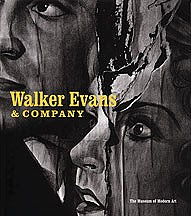
2. Tod Papageorge’s essay "Walker Evans and Robert Frank: An Essay on Influence". This has become all the rage recently with a transcript of the original essay being made available online. I have had a copy of the original book years, which has the added advantage of including all the photographs that are referenced. But really, it's not his best work, rather convoluted, forced in places and somewhat muddled. Geoff Dyer does a much better job in The Ongoing Moment of talking about Evan's, Frank, Friedlander and a host of others and their interrelationships and influences - both visual and intellectual. And the book Walker Evans and Company does a better job of illustrating these influences and examining them in great depth.


3. The Education of a Photographer by Charles Traub has been much lauded lately, especially his "
Do's and Dont's"


Do something old in a new way
Do something new in an old way
Do something new in a new way, Whatever works . . . works
Do it sharp, if you can’t, call it art
Do it in the computer—if it can be done there
Do fifty of them—you will definitely get a show
Do it big, if you cant do it big, do it red
If all else fails turn it upside down, if it looks good it might work... etc etc

Don’t do it about yourself—or your friend—or your family
Don’t dare photograph yourself nude
Don’t look at old family albums
Don’t hand color it
Don’t write on it... etc etc blah blah blah

Now, either Traub has done this totally tongue in cheek (which I suspect - in part because he completely contradicts himself more than once) in which case people seem to have been taking him far too seriously - or else he's full of it (entirely possible, being an art professor). Either way, I was seduced by a review a while back and ordered the book. The selection of essays, while they sounded promising, turned out to be rather pedestrian on the whole, and not awfully inspiring (which I assumed was part of the raison d'etre for the book?). Anyway, there are some much better collections of essays and extracts out there - some long out of print but quite cheap - such as
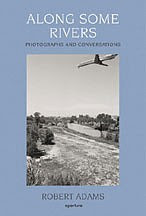
Photography: Essay & Images edited by Beaumont Newhall, or Photographers on Photography edited by Nathan Lyons among others . Hunt them out - they are more rewarding. Or read any one of Robert Adam's short books on photography - especially the conversations in the recent Along Some Rivers


4. This is a twofer - two recent novels about photographers (I'm try to think here - are there any really good novels about photographers/photography? There are a couple of semi-decent ones such as Afterimage, loosely based on Julia Margaret Cameron. The Mercury Visions of Louis Daguerre was definitely rather odd... as was Consolation by Michael Redhill (the 18th Century part was good, the contemporary part just didn't hold water). But no really good ones I can think of - say something contemporary that would stand up alongside a novel by Banville or Murakami, or McEwan


So, one novel about Edward Curtis and one about Edward Steichen.


The Last Summer of the World by Emily Mitchell is about Steichen in the early 20th Century. However, there are far better novels about the first world war (such as Pat Barker's Regeneration trilogy or No Man’s Land by Kevin Major), about romance and about love and loss in the First World War. Or pick up a Steichen bio instead.


The second novel is The Shadow Catcher by Marianne Wiggins. Previously she’s actually written a quite good novel about war photography, but this one dragged me down after a couple of chapters or so (although I eventually persisted to the end). It was described as Wiggins taking "a magnificently Sebald-like approach to fictionalizing the life of photographer Edward Sheriff Curtis" which frankly was a load of old codswallop - as well as an insult to Max Sebald.

(Guy Vanderhaeghe does the combining of two stories in two time periods in the West + Hollywood far far better and much more convincingly in The Englishman’s Boy - soon to be a movie/TV movie? with Bob Hoskins)

5. Digital black and white

I'm not talking the analogue/digital debate (although that's also not worth wasting your time on), but rather digital "colour" images converted to black and white. They are so smooth, “perfect” and characterless. They also tend to look like everything has been photographed on Agfa Scala slide film (fine every now and then - but not all the time).

I've been following
Doug Stockdales blog - it's quite fun and interesting, but the digital B&W images are driving me nuts – not their content, but their “look”. But it can also be seen by the bucket-load on Flickr:


One of the wonderful things about black and white photography - even when it's scanned and printed digitally - is the endless permutations of film and developer (and I know you can get Tri-X and HP5 Photoshop filters - still doesn't mean the end result looks like Tr-X or HP5 though - I haven't tested one that really does the job yet... along with the whole bunch of tools in PS CS3... ). Tri-X in Rodinal, Efke in Pyrocat HD, HP5 in DD-X, Tri-X in D23 and on it goes. Each one has it's own distinct character, look and feel. Add in expansion and contraction development (love it or hate it) and you multiply that again. The majority of digital "B&W" that I see just doesn’t come anywhere close to having these characteristics. It's simply homogenized. Which, on the whole, is rather different from most of the colour work - colour digital work can sing (as can analogue/digital hybrid colour).

Though probably the biggest single reason that so many converted colour images look crappy in greyscale is nothing to do with technique, but rather vision - on the whole, good black and white pictures simply aren't colour photographs with the colour removed.

Now
maybe this will all change, but as it stands right now this is Greyscale photography, not black and white.

For Black and White photography, get a real camera and real film (scan it if you don't like darkroom chemicals) - a Leica (
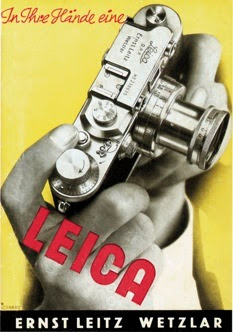
All Praise Ernst Leitz in the current New Yorker), a now cheap used Pentax 67 or similar, or a Linhof or Toyo - or a nice wooden thing from China and a box of Tri-X or HP5.


6. This one's the keeper - The Day to Day Life of Albert Hastings - a wonderful little book at a bargain price – but more on it tomorrow....

A few more from Traces


A city's back lanes are a shadowy mirror of the more respectable street grid


A couple or so more new pictures from Traces: alleyways & spandrels


“A city is nothing but streets and edifices teeming with memories, and memories are inextricably tangled up with civic and family and personal memories,” Guy Maddin

Friday, September 21, 2007

"Traditional" Coke toning...

Another useful bit of information from the inimitable Luis


Coke Effect On Photo

Now, I wonder what some of my pigment inkjet prints will look like done this way? Diet or Regular? And maybe Cherry Cola will give me an Atget-ish warm red tinted Printing Out Paper look...

Thursday, September 20, 2007

The making of Robert Frank's Storylines


Here's one for Julian that I came across on the MVS blog.


Gerhard Steidl is one of the more interesting (and prolific) publishers and printers of photography books out there today - everyone from Alec Soth to Lewis Baltz to Michael Schmidt to Karl Lagerfeld and beyond.


As well as the usual book catalogue stuff on their website they have all sorts of interesting things tucked away - one of which is a slide-show sequence of the production of Robert Frank's book Storylines


Photographers, it seems, often come and stay at Steidl's atelier in Göttingen while the book is in production - where everything from design to printing is done in the one location - residing at what has become know as the Halftone Hotel (Alec Soth just wrote from there where he was overseeing the production of Dog Days Bogota and rooming next door to Jock Sturges...).


Anyway, it's a fascinating little look at the making of a photo book:

"I always dreamt of having a small book factory. At the top, you throw in an idea and after a few days a finished book tumbles out below"


Humble Arts Foundation

A few updates from the Humble Art Foundation in NY

They have Group Show No. 18 up - some interesting work as usual


They also have a small (humble?) grant programme for emerging artists - Deadline October 1st.


Finally, they have some limited edition affordable prints for sale (I love Corey Arnold's picture, but having lived in the arctic and sub-arctic for over 12 years, it just looks too cold for me to actually buy...).

I think (or at least I hope) these guys are working hard at breaking the hold of the existing MFA/Gallery system doing what my friend Luis Gottardi has described as "A hybrid, gallery/bloggers kind of tiered filtration system..., with social connections and acknowledgements acting as remuneration of sorts for the lower levels. Much more of an organic, grass-root, seeding system than what we have now, with one legitimizing the other." (no doubt I'll hear if he agrees with my application of his words or not...)


Wednesday, September 19, 2007

Arnaud Maggs


It sometimes seems - to me at least - that talented Canadian artists often seem to be hidden under a bushel. But maybe it's because I've only been following the art scene here for 20 years...

It can all be very strangely regional and fragmented. Toronto artists might have no idea what is going on in Montreal. And heaven forbid you live out West. Vancouver artists often seem to have more in common with and communication with artists in Seattle or San Francisco than the rest of Canada, and an artist in Montreal can be lauded in Paris and Berlin and barely heard of in the rest of the country.

Which is a roundabout way of saying that I ran into one of those late night art documentaries on one of the numerous education channels (TVO if you want to know - which actually carries some good art docs) about a fabulous photographer and artist Arnaud Maggs.


(Of course, maybe I just don't pay enough attention, he did win the 2006 Governor General’s Award in Visual and Media Arts... and yet our city library system, which actually has an excellent art collection, many inherited from the city Art Gallery, has none of his several books)

I only caught the programme about a third of the way in, and I think I must have seen a bit of his work at one time in a magazine somewhere, but I was hooked.


First off Maggs came across as articulate and deeply involved with his work. Full of excitement about it and about continuing to explore things. He also came across as rather delightful and somewhat mischievous. I was equally interested to note that he didn't decide to "become an artist" - a full-time one anyway - until he was 47 and he's in his early 80's now.


The film gave something of an overview of his work while following him around his workshop/studio, at exhibitions and wandering around Paris flea markets - where he seems to get much of his inspiration.


He seems to have started off doing series of grid portraits - almost Becherlike in their quality and typology - of course made at the same time that the Bechers were just beginning to show their work as well in N. America and at Documenta. In fact it's not entirely coincidence that one of his more well known pieces Joseph Beuys: 100 Profile Views, was made in Düsseldorf - Becher ground zero:

"Perhaps in its obsessiveness, Maggs's work has some of the serial qualities of the work done by the Bechers, but theirs is a project which cannot escape its subject. Being mainly industrial, the Bechers's buildings are intimately connected with the specific cultural evidence of economic structure. The subject/object dilemma of photography is unabashedly acknowledged in Maggs's work with the presence of some thing as ostensibly subjective as a face."

One essay describes him as a photo-anthropologist, which seems to fit pretty well: "Arnaud Maggs has been referred to as a kind of photo-anthropologist, using his camera to capture and re-present the past’s forgotten ephemera".


After that he moved on to different things, though usually still loosely tied to types or collections of things. Paris "Hotel" signs - all vertical and thin. And black bordered death notice envelopes - yep - sounds odd - and collected from those flea markets, but quite mesmerising. As were his photographs (and other artifacts) of small colourful tags that came from 19th century child labour in French textile mills, listing piece work completed and the children's names and ages.
And although the documentary was made three or four years ago, Maggs seemed vibrant and full of energy and ready to keep heading off in new directions with new ideas - quite inspiring in fact.


JoAnn Verburg update


Yesterday I frustratingly found the stub of an NYTimes article on Verburg's MoMA show. But as the NYTimes decided as of midnight to "de-classify" all of it's online articles and no longer charge for them, the whole thing is now conveniently available today (along with many many more...) - yeay!

"TIME doesn’t exactly stand still in JoAnn Verburg’s photographs. Not that her single images, diptychs and triptychs are set up to create narrative sequences in which one thing leads to another, as with Eadweard Muybridge’s motion studies of a man jumping or a horse running. Instead her portraits, still lifes and landscapes generate a state of prolonged experience. Ms. Verburg spends most of her days in Minneapolis in her studio, but she makes a distinction between the production work she does there — scanning her film, editing images, researching — and the creative work she does in other places, mostly in Italy or Florida, where she and her husband spend extended periods of time...

...Italy has been a rich source of inspiration. “Exploding Triptych, 2000” is part of a series of photographs of olive trees that began with a simple snapshot near a house she and her husband rented in the countryside near Spoleto. “There was something I wanted to pursue — I didn’t know what exactly — a freshness or airiness, a sense of vitality,” she said.

Ms. Verburg doesn’t set out with a particular idea of what she wants to photograph. She finds her way into a subject or a theme, “like a dog who circles a few times to make a nest before she lies down in a ball to sleep,” she said. “With the olive tree photos, the best state of mind I can be in is to be without expectations and to be ready to go to work not knowing what the work will be or if I will later like what I have done.”

As ever, she eventually gravitated to the same theme of time and space in that series. As she spent more time photographing in the olive groves, her interest in color grew. She started photographing in the early morning or at dusk, when “the light shifted from blue to yellow to reddish-magenta to purple, and I had to be ready before the yellow light disappeared, or I was too late.”

“Living — being alive — is a present-tense enterprise.”"
more

Tuesday, September 18, 2007

JoAnn Verburg


This looks like potentially pretty interesting work.

After toiling away for many years as part of the Minnesota Photo Mafia (well, "toiling" in Italy as well as wintry Minnesota...), JoAnn Verburg currently has a retrospective show at the Museum of Modern Art (this is the sort of show I wish I could just take part of a Wednesday afternoon to pop down and look at...).


She has a long record of projects and shows, going back to Mark Klett's Rephotographic Survey Project in the 1970's and having shows at Pace/Macgill etc

Her pictures describe spaces and moments suspended in the reverie that precedes action. Like a Leyden jar, they are containers of potential. - John Szarkowski


As people may have guessed by now I'm pretty interested in using blur, differential focus, narrow focus, movement and complexity/screens to break away from the sharp from foreground to background approach to photography, as well as trying to break the hold of perspectivism on my photography.


This seems pretty hard to do effectively - especially to do in a way that isn't overly contrived or "twee" (as my grandmother would have said). Verburg seems to manage to do this quite successfully in much the work I have seen online


I also like the way most of her diptychs/triptychs work - they don't feel at all forced.


From an article on MNArtists.org:

A little deceptive, and always somewhat elusive, there is nothing easy, obvious, or spontaneous about these images. Each one appears constructed with a deliberation and care that demands a similar sort of attention from us when we view them. We can see this kind of meticulousness in Verburg’s manipulation of focus. In many of the olive tree photos, she varies the camera’s focus so deftly that the seeming simplicity of a tangle of branches or cluster of leaves is belied by a whole host of visual shifts. It’s a very subtle form of choreography, in which the images are composed not by their content, but instead by Verburg’s delicate fiddling.


We see this best in Campello Olive Trees for Giulio (2003), in which a small olive tree stands alone in the bottom center of the image. The dead center of the tree is in focus, but the rest is clouded in a halo of blur; in the extreme right corner, half of an olive branch is in sharp focus. Meanwhile the upper half of the image, a gray sky flecked with branches, is so blurred that it becomes kinetic, spinning as if it could give us a touch of vertigo if we look for too long.

In her pyramid photos, Verburg uses an ambiguous perspective to similar effects. Photographed from an aerial vantage point, it’s impossible to tell whether these sand structures are miniscule or enormous, monumental or in danger of disappearing entirely. Through Verburg’s manipulations, what we begin to see is the act of seeing itself, or perhaps the way our sight gets confounded and enhanced by invisible elements such as atmosphere, light, or point of view, Joann Verburg has written that her many photographs of olive trees are meant to make the viewer feel connected to them. However, she seems to be withholding something in that connection. If these photos invite us into a conversation, it’s not one we’d have with a lover or a dear friend. Not that the substance of our talk would be idle or insubstantial; instead, it’s rather like suddenly stumbling on a very serious discussion with someone you hardly know. It’s intimate, but not personal.


And yet, these photographs don’t leave me completely cold. There is something unexpected, and suggestive, about such reticence. The images, while they frustrate available associations, simultaneously make room for their own.

There's also a nice looking MoMA book Present Tense to go with the show. Alec Soth also has a useful little piece on her.


POSTSCRIPT: I just noticed 5B4 has a very good review of Present Tense

Monday, September 17, 2007

William Eggleston "In the Real World"


I just finished watching the DVD William Eggleston in the Real World (obtained from the local library) - I found it by turns fascinating, mildly depressing and illuminating.

Eggleston comes across as laconic and taciturn in the extreme, yet with burst of humour and grace.

The first 15 or minutes of the film follow him as he wanders around Mayfield Kentucky on a freezing winters day photographing at the invitiation of Gus Van Sant. He seems mildly lost and yet sure of what he wants - he stops and starts, backtracks, prowls around a diner - though I ended up wanting to give him a scarf and a hot cup of tea (with maybe something a little stronger in it).


In different scenes Eggleston seems to slow down almost to a stop but then there would be a burst of energy before slowing down again. His speaks so quietly, his southern accent and diction almost a mumble, that his words are subtitled, highlighting the feeling that this is all something foreign.


And at the temple like Getty Museum in LA he becomes almost like an excited schoolboy as he wanders around a newly hung show of his work, peering closely at a print here, exclaiming about the selection of work there - all the while the public viewing the exhibit apparently oblivious to who this well dressed elderly gentleman is.

Oh and there's also lots of rather drunken rambling.


At the end of the movie, the film maker attempts to engage Eggleston in a conversation about the process of picture making and Eggleston merely becomes more and more obtuse (and the film maker more and more annoying), but it is preceded by his ruminations on dreams about beautiful photographs - which is quite magical - and ends with the following:

"Whatever it is about pictures, photographs, it's just about impossible to follow up with words. They don't have anything to do with each other...Art, or what we call that, you can love it and appreciate it, but you can't really talk about it. Doesn't make any sense."

The more you watch him, the more and more his pictures seem to make simple sense - this is merely how he sees. In the end it all seemed to confirm Geoff Dyers description of Eggleston where he says, in part:

"Eggleston's photographs look like they were taken by a Martian who lost the ticket for his flight home and ended up working at a gun shop in a small town near Memphis. On the weekend he searches for the ticket - it must be somewhere - with a haphazard thoroughness that confounds established methods of investigation..."

There is a short NY Times review here
And you can view the trailer here

(I should add that the "production values" in this documentary are poor - to put it mildly. But if you can manage to put those aside, which I must admit took me a while, I still think it's worth watching)


Problems with Mrs. Deane

I've enjoyed reading the posts on the blog/sit Mrs. Deane for a while now.

http://www.beikey.net/mrs-deane/

But for the last few weeks I haven't been able to log onto the site. I know it's still going, because Google Reader still religiously reports the new posts every few days - unfortunately it strips out the pictures

But whenever I try and go direct I get the usual "The page cannot be displayed" thingy. This is the only site I seem to experience this on

So I can read the posts but, frustratingly, I can look at the accompanying photos

Anyone else experiencing this? Any suggestions...?

Sunday, September 16, 2007

Paul Graham's Chekhov


I was just reading the current Photoeye Booklist magazine (well worth subscribing to btw - usually lots of good reading) and there is a very good interview with Paul Graham about his new book (or rather collection of books) A Shimmer of Possibility. Though the interview also covers a lot more ground than just the new book.

Graham is probably one of the most influential contemporary British colour photographers. I remember encountering his work in the mid 80's and how - at that time - it pretty much blew me away. He could probably be credited in large part with dragging British Photography out of it's 1950's documentary/photojournalism style which had dominated right through until the 80's.


His books A1: Great North Road and Troubled Land are two superb books of photography that still hold their own today. The latter is one of the best representations out there of Northern Ireland during "The Troubles" of the 70's and 80's. The somewhat later New Europe is also worth seeking out. As he says in the interview, he doesn't generally stick with one tried and tested way of doing things, but explores new possibilities.


A Shimmer of Possibilities is described as: "Inspired by Chekhov's short stories-and by his own contagious joy in the book form-photographer Paul Graham has created A Shimmer of Possibility, comprised of 10 individual books, each a photographic short story of everyday life. Some are simple and linear - a man smokes a cigarette while he waits for a bus in Las Vegas, or the camera tracks an autumn walk in Boston. Some entwine two, three or four scenes-while a couple carry their shopping home in Texas, a small child dances with a plastic bag in a garden. Some watch a quiet narrative break unexpectedly into a sublime moment-as a man cuts the grass in Pittsburgh it begins to rain, until the low sun breaks through and illuminates each drop."


Here are a few selections from the interview (Photoeye has the full text online):

Richard Woodward: Let’s start with this new book, which is actually a series of books, and work backwards. How did the project originate?

Paul Graham: My principal sources were Chekhov’s short stories, and the critical essays around those. A lot of people have tried to understand why this writing works so well, since in the stories there’s not much happening. They’re dealing with the simple, everyday things—in one of them a woman is combing her hair for six pages, remembering that night at the theatre; in another a school teacher is coming home in a cart dreaming of meeting the landowner, who does ride past and they exchange a few pleasantries, but nothing more. But there’s something magical about how perfectly described they are, the transparency of what’s happening, without guff or show, simply described, with nothing proscribed. I’ve been traveling around the States for a while now, and wanted to do something looser and freer, to take pictures of people at the most ordinary, everyday moments — cutting the grass or waiting for the bus, smoking cigarettes or traveling to and from the supermarket. I wanted to reflect Chekhov’s openness, his simple transparency; this was something I tried to move toward. I’m not, of course, literally illustrating Chekhov’s stories, but similarly isolating a small rivulet of time. So, each of the individual books is a photographic short story, a filmic haiku. They are quite short, but complete in their modest way...


...RW: But if you’re going to travel to Europe and Japan you must have figured out ways to support yourself.

PG: You sleep on friend’s floors. I traveled in an old Mini—the original Mini—and I slept in the back of that for a long time. I ate in truck drivers’ cafes. I had a friend who found out-of-date film for me. Then you do some teaching and get a small grant. The documentary-style tradition is very strong in England. Eventually I met up with Martin Parr, Chris Killip, Graham Smith, John Davis. Then my first book, A-1 The Great North Road, came out in 1983. It was a journey along the main artery of the UK, much like Alec Soth did with the Mississippi recently. Large format, color, landscapes, portraits, buildings, etc. The book proved quite poisonous to that black-and-white tradition. It’s been forgotten how radical it was to work within the social documentary tradition in color, at that time. Now it’s so commonplace, people wonder what the issue was. Within four years I published three books: A1, Beyond Caring and. But by 1987, I could see this juggernaut of color documentary photography in England; it had really taken off. Martin Parr switched to color, so did people like Tom Wood, and then our students, like Paul Seawright or Richard Billingham too. But I felt it was time to move on from that, before it became exhausted. For example, the mixing of landscape with war photography in Troubled Land was striking and quite successful—I had shows in NYC galleries—but what happens is that you hit this resonant note and everyone wants you to repeat it. I was invited to duplicate Troubled Land in Israel and South Africa. Commissions, dollars, travel, the whole nine yards. But I thought, I can’t do this. For better or worse, I’m one of those artists who once something is “proven,” have to drop it and find another way to scare myself...


RW: So you went to Europe?

PG: In the early to mid 80s I had made friends with a group of German photographers who were quite distinct from the Bechers’ Düsseldorf school. They were mostly around Essen- Berlin: Volker Heinze, Joachim Brohm, Gosbert Adler and Michael Schmidt too, who was running these workshops in Berlin and inviting people like John Gossage and Lewis Baltz to come over.

RW: It’s funny that school is so unknown here. Michael Schmidt even had a one-man show at MoMA.

PG:Yes, a great show and few remember it. It’s as though the Gursky show wiped out people’s understanding of everything else in Germany. Gursky is much more accessible. He goes for the jugular because it is about “the great photograph.” Of course, he succeeds, but it’s recidivist, in a way. Photographers have been trying for years to make bodies of work where images work incrementally to build up a coherent statement. It’s not about one great picture by Robert Adams; it’s about twenty or thirty pictures that build a sensitive, intelligent reflection of the world. It’s the same with Garry Winogrand, or Robert Frank. Gursky brings it back to that “wow” moment. It sort of undoes that way of working, and reduces things to the “What a great shot!” appreciation of photography. I’m a sucker for that as much as anyone, but want people to appreciate what Robert Adams does more so...

Finally, I'd add that there's a dearth of Graham's work online - you're pretty much forced to buy the books (though you can almost guarantee they'll go up in value...)

Thursday, September 13, 2007

Nicholas Hughes - In Darkness Visible


Don't you just hate it when you have an idea for a project, but you haven't fully formulated it or got around to it and then you find someone has just done the exact same thing...


That was my first thought when I saw Nicholas Hughes' project In Darkness Visible taken in the great London Parks, on Lens Culture. My second response was hmm - very Steichenesque - which isn't necessarily a bad thing (+ I'm just reading a novel about Steichen's early life and time in France in WWI, which has resulted in half a dozen massive Steichen tomes from the library stacked around the house)


...I have constructed a forest built from accumulated memory and the ghosts of trees...

The city park offers an escape valve – a window leading the weary city dweller to reconstructed, consumable nature. Although the essence of these spaces can appear pseudo-natural, some of these great trees actually predate the infrastructure of the city, and despite their accommodated appearance have witnessed centuries of human endeavour...

You can find Hughes' website here - which has a lot of his other work on as well.


For me this is an interesting use of colour that yes, maybe looks back to the very early days of Autochrome colour and gum bichromate etc, but is also very different from the whole Contemporary American Color look so prevalent right now.

I would really like to see these in person (at the Photographers Gallery from today). As Lensculture says:

"The photographs of Nicholas Hughes play with light and seeing at the extreme ends of lightness and darkness. In his earlier work, his large white on white on white photographs were like whispers of tone and nuance that rewarded the viewer when your eyes could finally detect the delicacy and wonder and richness of what was there with such subtlety. They were so fine that it was nearly impossible for the finest book printer to hint at the overall elegance of the images. And trying to show them on a computer screen would be a crime."

I think I prefer Verse 1 to Verse 2 (which is also very good though)

Now, if only I'd got my arse in gear and actually got down to working on this idea...


(Edward Steichen, Platinum Print with applied colour)

Wednesday, September 12, 2007

Traces updates


"The city, however, does not tell its past, but contains it like the lines of a hand, written in the corners of the street, the gratings of the windows, the bannisters of the steps, the antennae of the lightning-rods, the poles of the flags. Every segment marked in turn with scratches, indentations, scrolls" Italo Calvino, The Invisible City

Here are a few more pictures from the Traces project. I have about another 20 to finish off and put up.

On my earlier post about editing for a selection to print up, many thanks to all who contributed. There was actually quite a wide variation in choices, but enough common ones that seemed to coincide with my own thoughts - and also a few which were consistently chosen several times but which I hadn't really considered. Plenty to think about. Though almost more helpful than that were the thoughtful commentary and criticism that many of you gave - there were some really useful gems in all that.

And Mel Trittin's comments were especially helpful - among other things she reminded me that in the "old days" you would just lay out a bunch of small prints and fiddle with them until they looked rights - well duh! I'm so used to ordering stuff into databases and digital asset management software (mainly from my work in museums and archives) that I had rather forgotten that simple way of doing it... So I printed up a bunch of playing card sized thumbnails on sheets and took them to the cottage with me, then got my two boys to cut them all out and then I got to shuffle the pack and play with them - K.I.S.S.


(Spandrel - 77th Street)

BTW, these photographs haven't been added to the website yet - in fact the small jpegs for the web are the last stage in a somewhat laborious process as these start off as 400+mb scans which often grow to about 800+mb with the addition of adjustment layers which then slows Photoshop down significantly.

But I'd rather get all the adjustments done on the master files rather than working on several different versions and repeating the same things several times.

Lastly, I've got at least a couple of magazine articles in the works (fingers crossed) - one based on this Traces work and another on some of the Immersive Landscapes work - I'll keep you posted.

( Alley- 97th Avenue. Beaver Dam or Edmontonosaurus nest? My boy's are conflicted)

P.S. - yes, there really is such a thing as an Edmontonosaurus...

Eugene de Salignac


There was a bit of a buzz about Eugene de Salignac's photographs a few months ago and now there is a nice article about him and his work in the Smithsonian Magazine


Salignac was a municipal photographer for the City of New York (and in particular the Department of Bridges) who died unheralded in 1943 at the age of 82 and took over 20,000 photographs (mostly 8x10 or so glass plates apparently) of the growing city between 1903 and 1936 - a period of massive and rapid growth in the city.


His work, as a whole body, was only re-discovered in 1999 by New York City Municipal Archives photographer Michael Lorenzini who realized that many of the photographs he was scrolling through in the microfiche records were obviously the work of one eye and hand.


Aperture published a book of his work earlier this year New York Rises: Photographs by Eugene de Salignac (and have a few more images up on their site). There also a short article and slideshow at the New Yorker. From the Smithsonion Magazine:


De Salignac's time as a city worker coincided with New York's transformation from a horse-and-buggy town into a modern-day metropolis, and his photographs of towering bridges, soaring buildings, trains, buses and boats chart the progress. "In this remarkable repository of his work, we really see the city becoming itself," says Thomas Mellins, curator of special exhibitions at the Museum of the City of New York. "During this period, New York became a paradigm for 20th-century urbanism, and that has to do with monumentality, transportation systems, working out glitches, skyscrapers, with technology—all of the things that emerge in these photos."


De Salignac's photograph of the Staten Island ferry President Roosevelt coming into port, made in Lower Manhattan in June 1924 with a bulky wooden field camera, typifies his ability to stretch beyond straightforward documentation. "This is not your typical municipal photograph," says Moore. "There's a sense of anticipation—that perfect moment where the boat is about to dock, and a sense of energy, a flood about to be unleashed." Adds Lorenzini: "It shows him thinking like an artist."


De Salignac's pictures have been reproduced in books, newspapers, posters and films, including Ken Burns' Brooklyn Bridge; though largely uncredited, his work helped shape New York's image. "He was a great chronicler of the city, in the tradition of Jacob Riis, Lewis Hine, Stieglitz and Berenice Abbott," says Mellins. "The fact that he was a city employee may have made it less likely that people would think of his work in an artistic context, but these images indicate that he really takes his place in the pantheon of great photographers of New York."


Lorenzini still isn't satisfied. "I'd like to know what he did for the first 40 years of his life, to see a photograph of him as a grown man," he says. "Where did he learn photography? Was he formally trained? Did he consider himself an artist?" Information about him, and prints by him, keep trickling in. Not long ago, a woman mailed to the Municipal Archives ten photographs of New York that she'd bought at a Texas flea market; Lorenzini immediately recognized them as de Salignac's. And a cache of 4,000 de Salignac prints was recently unearthed in the Battery Maritime Building in Lower Manhattan. "There is definitely more to the story," Lorenzini says...

Tuesday, September 11, 2007

Bernd Becher by Andreas Gursky


Published in The Art Newspaper, a letter from Andreas Gursky to his teacher, mentor and friend Bernd Becher on his passing (I think this fits somewhere in Alec Soth's recent musings on teaching art):

Yesterday I received the very unexpected news of your death. This news is made all the more painful for me as we did not get to see each other in the past year. You do know, however, how enormously important your influence was—and is—not only to me, but also to a whole generation of younger people.

You and Hilla have produced an invaluable and multi-faceted body of work that has served as an invaluable point of reference for us. We adapted and developed many stylistic characteristics of your technique. Yet, in my opinion, there is another crucial factor that ensured the uniqueness of the Becher School: teacher-artists can be found anywhere, but only a few succeed in transmitting your kind of drive to their students.

You were never a power-hungry man, abusing your international fame for political or institutional influence, but, instead, you stoically endured the criticisms of your academic peers. These made you all the more determined to pursue your unconventional teaching methods, which included affording absolute priority to your own and your students’ artistic visions.


When your students came to you with their work, you often reflected upon it late into the night, and took the time to comment, using apt art-historical examples. By the end of these private tutorials, not only were your floors covered with books, but books were also perched on top of the many red-labelled Agfa film cartons, tripods and ladders that were strewn about your studio. A permanent chemical odour signalled the authenticity of your work and living space—where, for the lifeof me, I cannot remember ever seeing a comfy sofa. Having spent my childhood and youth in over-designed advertising studios, it was a key experience to have such an insight into your world. I still remember my tipsy walk home—through that enchanted gateway in front of your studio, past that red van, which was packed with your heavy ladders of all sizes.

Bernd, I thank you for this important time in my life and hope that you will continue quietly to guide me through today’s art circus with your dry humour and carefree attitude.

In friendship,

Andreas

An conversation with Mitch Epstein


I mentioned Mitch Epstein a while back and I notice that Joerg Colberg has an interview with him up on Conscientious:

Jörg Colberg: Before talking about any individual project of yours let me ask you something about photography in general. You have been working as a photographer for quite a while, and you have covered a wide range of topics, all the while both contemporary photography and the world at large have undergone fairly large changes. I would be curious to learn about how you think your role as a photographer and your interest in what you wanted to record have changed?


Mitch Epstein: I don’t think in terms of having a ‘role’ as a photographer, nor do I consider my purpose to “record.” I am compelled to interpret, not record the world around me...

...What I want to photograph changes with time. The stakes are higher for me both humanly and artistically, as I get older. I have a family now and a more acute consciousness of the world as a welcoming or non-welcoming place for my child. I have thirty years of photographing behind me, and I’m more demanding with myself than ever — I want those years of experience to support my more mature engagement with making art. I feel like I’ve been building up to or training for a kind of high wire act. I’m using decades of experience to balance me while I try out a way of working (large-format landscape) that is totally new to me. Each picture is now made in a slower, highly deliberate manner that I couldn’t have imagined using twenty years ago...


JC: Coming to your own work, there is one question which I like to ask simply because it touches something that many photographers are struggling with: How do you decide what project to work on, what subject matter to pick?

ME: I never pick my projects, my projects inevitably pick me. I don’t mean that
glibly. I’ve learned to listen to what moves and troubles me, and that leads me to where I have to go next.

I have been through many hellish periods where I don’t know what’s to follow after finishing a body of work – a kind of post partem. But I’ve learned that it is helpful to remain patient, open, and necessary to allow myself to relax and pursue other interests beyond photography during these periods..." more

There also some good stuff in there on Epstein's book and project Family Business (which I think is one of his best), as well as American Power


Monday, September 10, 2007

The Joy of Parking


For anyone interested in the built environment - especially it's under-noticed aspects, BLDGBLOG is a must read. In a recent post he points to a new book (and articles on it) The Architecture of Parking.

I must admit, these kinds of places fascinate me, both as part of our social structure and also photographically. And while the book itself appears to be an interesting if enthusiastic paean to parking structures, I like the slightly darker take on them from BLDGBLOG:


"Building Design takes a look at the "joy of car parks" – including this beautifully faux-classical quasi-Piranesian garage, the Parc des Célestins, built in 1994 in Lyon.Unable to resist the obvious, however, when I hear someone say "the joy of car parks" I have to quote J.G. Ballard: "Take a structure like a multi-storey car park, one of the most mysterious buildings ever built. Is it a model for some strange psychological state, some kind of vision glimpsed within its bizarre geometry? What effect does using these buildings have on us? Are the real myths of this century being written in terms of these huge unnoticed structures?""

(I'd also add that for anyone photographing the modern city, reading J.G. Ballard is also essential...)


Finally, I know this last example first hand from Chichester where I grew up. I must say they certainly highlight it's features in the photograph, mirroring the medieval/roman wall of the city. But finding your way along the "battlements" to your parking spot with an 18 month old in typical British Autumn rain is more like advancing across the Somme. Which is to say that while I do find such structures fascinating, I have rarely found one that is pleasant or innovative to experience - but more usually oppressive and frustrating.

As for the futuristic "Matrix" style car park they show, I have trouble enough worrying I'm going to stop in time when I go over the little wheel ramp in a car wash, never mind some thing that's going to hoist my car into a sort of automobile filing cabinet.

(And then there's Martin Parr's photographs of parking spaces - a book I'm not quite sure I want to fork out for)

Friday, September 07, 2007

half awake and half asleep in the water


I'm intrigued by these photographs by Asako Narahashi. There's something about them that's at once both slightly frightening and strangely comforting about them (okay, I once spent some time floating around in the English Channel as part of the training for an offshore rescue boat...).


"half awake and half asleep in the water by Tokyo-based photographer Asako Narahashi. A suite of fifteen 20" x 24" photographs, showing images with half of the photographic surface covered with water. The water looks dark and poetic, and would naturally call in images of sleep and the subconscious.

Asako Narahashi once remarked that she was not particularly fond of the ocean, rivers or lakes. She began her half awake and half asleep in the water probably in 1998, after her visit to Okinawa in the summer, and where she experienced, after a long time, snorkeling and the joy of floating in the sea. She was then working on another project and discovered in her contact sheet this vague and unclear image that she described, "just like the moon without an edge floating on the ocean, beyond everyday life." The image must have been lying in her sub consciousness and imprinted somewhere in her brain. It has now come to surface and steered her towards a refreshingly new direction.


The photographs in half awake and half asleep in the water are images that peek from this shore through to the other shore. They look candid and relax, but are the labour of courage and love from an artist who is not a great swimmer. The art critic Kotaro Iizawa has commented on this series,"The visual line does not settle and leans heavily to one side, while the calm and collected colours of the photographs seem to trip up the viewer in an unstable manner. The feeling of being stranded however, is strangely comforting.""


Thursday, September 06, 2007

Manuel Alvarez Bravo


I mentioned Bravo the other day when I came across the book of his Polaroids (which I'm still eagerly waiting to see).

It's pretty much impossible to do justice to the work of Manuel Alvarez Bravo in a blog post, but here's to making at least a start on it.


I first became aware of Bravo's work close to 30 years ago when I picked up a monograph about him at a Library sale. It seemed like a good deal for a couple of Pounds and I had never heard of this Mexican photographer before.


Well, the book wasn't quite the deal I thought it was and it became apparent why the library had it in the sale... Bravo took some interesting nudes and some enterprising teenager (at least I hope it was a teenager) had drawn little penises on some of those with biro! But at least the majority of the images were unsullied (though I still can't see La buena fama durmiendo (The Good Reputation Sleeping) here without the image of a little blue penis hovering over her...).


That aside, it still suprises me that only Bravo died 2002, with over 80 years as a photographer. He is often placed alongside Cartier Bresson in the photographic pantheon - though usually on a slightly lower pedestal. Yet to my mind, Bravo's work is much more significant. He just happened to live in Mexico City, not Paris.
From John Mraz at Zone Zero:

"When Alvarez Bravo began photographing in the 1920s, the cultural effervescence that followed the Mexican Revolution (1910-1917) had unleashed a national search for identity, and the question of what to do with Mexico’s inherent exoticism was the burning issue for photographers. Perhaps influenced by his relationship with Weston and Modotti, Alvarez Bravo was the first Mexican photographer to take a militantly anti-picturesque stance, and he achieved international recognition for work which reached creative heights from the late 1920s through the mid-1950s, a period during which he perfected a sophisticated approach to representing his culture. Conscious both of Mexico’s otherness and the way in which that has led almost naturally to stereotypical imagery, Alvarez Bravo has always swum counter to the stream of established clichés, using visual irony to contradict what he initially appears to saying, hence inviting the viewer to engage in the task of interpretation.

Consider Sed pública (Public Thirst), the 1934 photo of a boy drinking water from a village well. This image contains all the elements necessary to make it picturesque: a young peasant, dressed in the white clothing


typical of his culture, perches on a battered village well to drink the water which flows from it; an adobe wall behind provides texture. But, the light in the image seems to concentrate itself on the foot that juts forward into the frame, a foot that is too particular, too individual to be able to “stand for” the Mexican peasantry, and thus represent their other-worldliness. It is this boy’s foot, not a typical peasant’s foot, and it goes against the expectations of picturesqueness raised by the other elements, “saving” the image through its very particularity...


Manuel Alvarez Bravo has been a definitive influence on Mexican and Latin American photography. His rejection of facile picturesqueness, his insistently ambiguous irony, and his redemption of common folk and their daily subsistence have marked out a path of high standards for photographers from his area."


There are numerous books available about him (including the Polaroids) such as here and here along with an interesting comparison:Manuel Alvarez Bravo, Henri Cartier-Bresson And Walker Evans: Documentary And Anti-Graphic Photographs, and also some good info at the Getty and at MoMA with a good essay on his work as well as images.


Wednesday, September 05, 2007

Edith - Polyfoto


Edith - London, 1935 (after Walker Evans) - click picture for a bigger view.

"Polyfoto - The Natural Photograph.
Polyfoto is the only system of photography giving natural and truly characteristic portraits, since the sitter can move and converse freely whilst the 48 photographs are being taken. 48 photographs for 2/6d"


(More to come, I hope, of Edith (and David) from St. Petersburg before the Revolution and British Spies arrested by Trotsky, to Paris, Helsingør to the Rhineland to Italy to the East African Campaign and the battle of Asmara).

Tuesday, September 04, 2007

Polaroids


There's something about well done Polaroid photographs that I've always liked - especially the SX70 style.

Those cyan blue or creamy skies; the slightly weird yet entirely pleasing colours; their one off - hold in the hand nature. The fact you still regularly find a fully functioning Polaroid camera at almost any garage sale (even if you can't find the film anymore). It seems like almost every home had one - or still does - and that even though the pictures often look somewhat unnatural, it's a look which has been absorbed and accepted by our collective unconscious as "normal"


Of course like Holga work, it's all to easy to overdo the Polaroid thing (though not quite as much of a danger as with Holgerism)

I recently came across some Polaroid work from (via Amy Elkins) of Taiwanese photographer -Nan Kuo which is rather lovely (above and below).


I've also liked the work from Japan - Tokyo Polaroid Plus - that I came across a few years ago - it seemed consistently good (unfortunately he switched to a Rollei I think at a later point)


And of course there is the master - Walker Evans' Polaroid work (hard to find much online) and found in the self-evidently titled book Walker Evans Polaroids. Apart from being some of the best early colour work it is also a fascinating insight into Evans' eye and his photography


My friend Jeffrey James once said he though Evan's Polaroid photography seemed a bit like Beethoven deciding to take up the Glockenspiel - a view I was pleased to see he revised after reading Geoff Dyers illuminating writing in The Ongoing Moment about Evan's taking up with the SX70. In part:


"... Both a reprise of and addendum to everything he had done before, the Polaroids made between September 1973 and November 1974 constitute a final radiant and unexpected extension of his vision. Revisiting his favourite motifs in a series of pellucid dreams, the 2,6o0 Polaroids are like a condensation of and an extended meditation on Winogrand's claim that Evans's "photographs are about what is photographed, and how what is photographed is changed by being photographed, and how things exist in photographs". His subjects remain the ones that had always dominated his work - empty buildings, discreet portraits, signs, found language - all strangely enhanced by the technical limitations of the camera..."

There's also a heavy duty essay on Walker Evans' Polaroid work here


(hmm and on looking up the Walker Evans book, I just discovered there are books of Polaroids by both Manuel Alvarez Bravo and Tarkovsky... cool)

Monday, September 03, 2007

Chuck Close - Daguerreotypes.


"photography never got any better than it was in 1840"

This is sort of old news (but I took a pile of unread magazines away with me to the cottage this week as we watched the leaves starting to turn... and I finally sat down and caught up on some articles) but I quite like these portraits Chuck Close produced working with the daguerreotype process.

As I understand it, when they were displayed they were displayed quite small as the one-off originals that are traditional daguerreotypes (6 1/2 by 8 1/2 inches - what's that - Whole Plate size?) - almost jewel like in their detail and polished metal finish.

From a very short interview on the Guardian:

Lorna is one of my artist friends. She has a very infectious smile and very sensuous lips - I had a photograph on my wall for a long time of just her lips. I love the way her face looms out of the darkness and floats there above the out-of-focus neck and chest. I love the way she looks too - the range of things that are in her face. And then there is this sculptural quality, almost like a Brancusi or something...


The picture is a daguerreotype, which used to be called "keepers of light". They have a range from the deepest, darkest velvety blacks to the brightest highlights that reflect into your eyes. Each picture has unbelievable detail and very shallow depth of field. Photographs are often so big now that 20 or 30 people can view one at the same time, but a daguerreotype is the most intimate image made with a camera, because it is small and only one person can look at it...

I'm not interested in daguerreotypes because it's an antiquarian process; I like them because, from my point of view, photography never got any better than it was in 1840.

There is a book of them available (an earlier version is out of print I think)

Also a slightly longer piece here on Lensculture