Tuesday, November 10, 2009

11.00hrs 11/11/1918


(Siegfried Sassoon's notebooks)

The Dug-out

Why do you lie with your legs ungainly huddled,
And one arm bent across your sullen, cold,
Exhausted face? It hurts my heart to watch you,
Deep-shadowed from the candle's guttering gold;
And you wonder why I shake you by the shoulder
Drowsy, you mumble and sigh and turn your head...
You are too young to fall asleep for ever;
And when you sleep you remind me of the dead.

Canada still commemorates Remembrance Day on the 11th of November, remembering the Armistice coming into effect on the 11th hour of the 11th day of the 11th month in 1918 thus ending The Great War.


For Remembrance day I noticed that the Cambridge University Library is acquiring Siegfried Sassoon's archive in order to preserve it and make it available. Sassoon was one of the best war poets to come out of World War One (along with Wilfred Owen and Rupert Brooke).

Despite serving as an infantry officer on the front lines and receiving the Military Cross, in 1917 he published "The Soldier's Declaration," speaking out against the futility of the war for himself and his fellow soldiers, stating: "I am making this statement as an act of wilful defiance of military authority, because I believe that the war is being deliberately prolonged by those who have the power to end it..." after which he refused to return to duty. Rather than being Court-Martialed, the army sent him to Craiglockhart Military Hospital in Scotland where he was treated by Psychiatrist W.H.R. Rivers. (The subject of Pat Barker's wonderful novel Regeneration). At Craiglockhart Sassoon also met Wilfred Owen with whom he formed a strong bond. Owen was to die just days before the Armistice on November 4th 1918, his genius cut tragically short. Sassoon eventually returned to the front where he was wounded in the head.


The Rear-Guard

(Hindenburg Line, April 1917.)

Groping along the tunnel, step by step,
He winked his prying torch with patching glare
From side to side, and sniffed the unwholesome air.

Tins, boxes, bottles, shapes too vague to know,
A mirror smashed, the mattress from a bed;
And he, exploring fifty feet below
The rosy gloom of battle overhead.

Tripping, he grabbed the wall; saw someone lie
Humped at his feet, half-hidden by a rug,
And stooped to give the sleeper's arm a tug.
"I'm looking for headquarters." No reply.
"God blast your neck!" (For days he'd had no sleep.)
"Get up and guide me through this stinking place."
Savage, he kicked a soft, unanswering heap,
And flashed his beam across the livid face
Terribly glaring up, whose eyes yet wore
Agony dying hard ten days before;
And fists of fingers clutched a blackening wound.

Alone he staggered on until he found
Dawn's ghost that filtered down a shafted stair
To the dazed, muttering creatures underground
Who hear the boom of shells in muffled sound.
At last, with sweat of horror in his hair,
He climbed through darkness to the twilight air,
Unloading hell behind him step by step.


Monday, November 02, 2009

Mr. Lee

I came across this short fun video by Mark Schwartz of his road trip with Lee Friedlander, compiled - as he puts it - on the occasion of Lee's 75th birthday (earlier this summer if I'm correct?)


Know I know what to eat to make sure I get to a ripe old age as well.

You may be able to view a higher def version here if you are on facebook (I was also having some youtube problems with it...)

(Thanks for the link to Terri Weifenbach)

Monday, October 26, 2009

WARNING: this model's hips were made smaller than her head in Photoshop. Human beings do not look like this.


Or; What's all the fuss about?

This advert for Ralph Lauren seems to have become the nexus for some quite strange responses to what many seem to see as the "problem" of digital manipulation (and has also confusingly become conflated and confused with the separate issue skinny models and unrealistic body image). I'm going to stick to digital manipulation - or more accurately, image manipulation

There has been something of an outcry about this and other similar images which has led to, among other things, a call from the British Liberal Democratic Party that all such images be labelled with the equivalent of the Surgeon General's warning on cigarette packets, identifying how much the image has been manipulated on a scale from 1 to 6. French parliamentarians also seem to be following suit.


(Paul Strand)

This has also been echoed in many area of the photographic press and blogdom and conveyed in the sort of sentiments which see this as a threat to "real" photography, which apparently aims to accurately show facts and/or tell the truth. The assumption seeming to be that such photography (often, though not always, advertising photography) is a threat because the more of it the public sees and is exposed to, the less and less they will trust real or proper photography.

Now, aside from the ridiculousness and absolute impracticality of trying to grade levels of digital manipulation - and I'm wondering how many members of the public were "taken in" by this and other such photographs; "Mum, what kind of diet do I have to go on to get my head to grow so big?" or indeed whether readers would take any notice of such warning anyway - it's simply a red herring as well as an excuse for some rather uptight photographers to get their knickers in a twist.


(W.E. Smith)

The point is that all this digital manipulation - indeed digital photography in general (whereby anyone can easily and simply play around with digital photographs on their home computers) - is a good thing. I'll say that again: digital photography and digital manipulation is a good thing. Especially for photography.

Digital photography has done photography as a whole a great favour over the last decade or so. It has stripped away much of the veil that the high priests of photography liked to keep between photography and Joe Public to prevent them from realising that photography isn't quite what they were led to believe.


(Walker Evans)

That is, the camera frequently lies and rarely tells the truth (and certainly not the whole truth and nothing but the truth). And that photographs which apparently present "facts" or "evidence" should be treated with a large grain of salt. People are now seeing much more clearly than ever before that most photographs (even photojournalistic ones) are constructs and fictions and that whatever evidence they may claim to present is at best inherently ambiguous, and that the photograph and reality are usually poles apart. Photographs have never presented an objective and impartial viewpoint and this has now become much more obvious to anyone who cares to look. Photographs rarely tell one clear and simple story - despite what may be the photographers intentions - and the viewer now has open to them a multiplicity of legitimate ways to read and understand the photograph.

I find that people are now far less likely to confuse the photograph with the thing photographed - a situation that had existed pretty much since the invention of the medium. People are also much more likely to cast a questioning eye back over photographs (as well as the "authorized" facts surrounding them) from before the digital era. Photographs are no longer trusted blindly in the way they were once generally expected to be.

This should really be seen as an incredibly liberating thing by photography as a whole rather than putting us on the defensive. Photographers no longer need to expend so much energy on trying the maintain their inherited fictions about their medium - i.e. allowing that it is a fiction - and we can now direct that wasted energy towards creativity and imagination instead. As a result viewers of photography have been granted much more freedom to come to the photographic image with their own ideas and understandings.

Perhaps it's time to stop worrying about the bogus threat of digital photography and digital manipulation and instead look at ways of exploring the new landscape and freedom that it continues to open up for us. Not as a technology but as a paradigm.


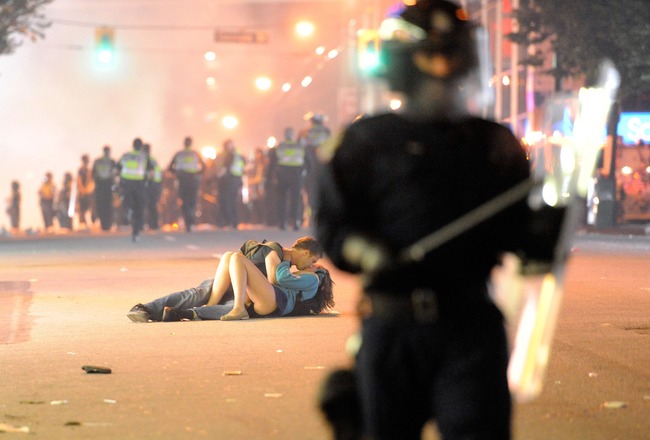
(Top photograph via Photshop Disasters - who were ordered by Ralph Lauren to take it down from their site, contrary to the Fair Use provision of US Copyright. The other photographs are all pre-digital and are just three examples of photographs that were manipulated in one way or another for publication or presentation)


Saturday, October 24, 2009

The Kindly Ones


"The real danger for mankind is me, is you. And if you're not convinced of this, don't bother to read any further. You'll understand nothing and you'll get angry, with little profit for you or me."


The Kindly Ones
by Jonathan Littel

A strange, controversial, intriguing, sometimes obscene and yet mesmerizing book.

"Oh my human brothers, let me tell you how it happened. I am not your brother, you'll retort, and I don't want to know. And it certainly is true that this is a bleak story, but an edifying one too, a real morality play, I assure you. You might find it a bit long--a lot of things happened, after all--but perhaps you're not in too much of a hurry; with a little luck you'll have some time to spare. And also, this concerns you; you'll see that this concerns you. Don't think I am trying to convince you of anything; after all, your opinions are your own business. If after all these years I've made up my mind to write, it's to set the record straight for myself, not for you. For a long time we crawl on this earth like caterpillars, waiting for the splendid, diaphanous butterfly we bear within ourselves. And then times passes and the nymph stage never comes, we remain larvae--what do we do with such an appalling realization? Suicide, of course, is always an option. But to tell the truth suicide doesn't tempt me much."


Friday, October 09, 2009

Unique photographs of the Battle of the Somme


A shell bursting some 10-20 yards way on the Somme Battlefield, 1916. Photograph from the album Lieutenant J.S. Purvis, 5th (T) Battalion (1916-1918). RICGH:2005.31.6

I just came across some quite amazing and unique pictures of the Battle of the Somme courtesy of the Darlington & Stockton Times in NE England (btw I love great how you can read articles from small regional papers like this now).

They were taken by Lieutenant John Stanley Purvis of the 5th (T) Battalion The Yorkshire Regiment (Green Howards) on the first day of the Battle of the Somme as he and his men began advancing across no man's land towards the enemy trenches. The photographs are now in the archives at the Green Howards regimental museum in Richmond, N. Yorkshire.


A unique photograph from the second line trench of troops advancing from the forward trenches on the first day of the Battle of the Somme, 1st July 1916. RICGH:2005.31.2

These are so unique because there are so few photographs of the actual combat in WWI. Most photographs we see are either some way behind the front lines or once the fighting has moved - showing the desolate shell pockmarked landscapes and so on. But there are very few show troops actually out of the trenches advancing to contact. For one thing, taking a picture under the withering enemy (and sometimes friendly) fire would - I think - put most photographers off. For another, Lt. Purvis could have been Court Martialed for taking photographs in the front line (if I recall correctly, keeping personal diaries was also prohibited on pain of Court Martial).

Other photos (there are 43 in all, still well worth looking at) taken by Lt. Purvis - more typical - though equally horrifying - show scenes of the battlefield such as "Soldiers digging into freshly made trenches in Delville Wood, October 1916" where the woods now merely consist of a few shell blasted stumps. I know there is at least one well know picture of "combat" in WWI that was used numerous times as a magazine and book illustration but was later found to have been taken during training. But of Purvis' pictures it is these two or three pictures that for me capture the eye and the imagination.


The scene of the Somme Battlefield, July 1916. RICGH:2005.31.5


What a fool, you might think, taking pictures while shells landed 10 or so yards away and rifle and machine gun fire was most likely coming in in your direction. But remember that an officer's main job was to make sure his men continued to advance into all that. Many did so armed with nothing more than a walking stick (an officer's pistol was of little use until all that ground was crossed and you were nose to nose with the enemy). So, I suppose, why not take a couple of moments to stop and take a photograph... I guess there was nothing you could do about it one way or the other....

From the paper:

"IT was the most terrible day in the history of the British Army with more than 57,000 casualties, of whom almost 20,000 were killed.

But the first day of the Battle of the Somme - July 1, 1916 - was just the beginning of a four-month operation that would end with more than 1.5m casualties.

The shattered fields of northern France ran red with blood and to this day the countries that took part remember the events with abject horror.

Now unique photographs of that first day have been made available for all to see..."

Purvis survived the war and although he went on to study at Cambridge and eventually become a clergyman, I think he had a real eye as a photographer:


A new type of barbed wire used by Germans in 1918. RICGH:2005.31.40


Thursday, October 08, 2009

Oooh - I want one of these...


The Nissan Land Glider concept. From LikeCool:

"Nissan has unveiled the Land Glider Concept at the upcoming 2009 Tokyo Motor Show. The Land Glider is two-seat electric vechicle, features the range of 160km (100 miles) in a full charge. It can lean into turns like a motorcycle, and sci-fi looking cabin, all full of monitors displays and a steering wheel which looks like twin joysticks."

More pictures (and a somewhat boring video) at LikeCool as well as at the Nissan site.


All a little bit slower... and rather more cosy (and rather more green) than this - The Ariel Atom (and a video below):


Top Gear - Ariel Atom - BBC


Featured Comment from Bee (and old friend):

Okay so now I have a Moleskine, but can't think what to write in it. I already had a couple of fountain pens, but don't use them... so while those funky inks sound intriguing, I can't see myself going there. But now this. I see your taste in cars is absolutely disgusting. American Muscle circa 1970, that's cars. The future as applauded by you is just debasing. Like in the future we'll all be Mr.Bean.

:-)


Wednesday, October 07, 2009

fountain pens, inks, notebooks and a store


(Stylus Fine Pens - Edmonton)

Here's one of my mildly off the topic posts - about the old fashioned way of writing things and keeping notes. A fountain pen and a notebook (or in my case, several notebooks).

I bought my first fountain pen in 1978 from a small stationers in the lovely little German town of Celle. It was a Mont Blanc - bought when they were still straightforward work-a-day pens not the insane status symbols they are now (nor
are they as well made now), the same company recently producing an overly ostentatious über tacky $25,000 gold and silver pen to celebrate Gandhi of all people (what the heck were they thinking!). But I still have my old original pen although the nib is getting well worn and needs re-tipping.

For a long time over the last few years I just used it for writing the odd letter and writing notes in a journal when I was on holiday or at the cottage. But apart from that, it didn't get much use. More recently though I got back into the habit of using it again along with a few of the other fountain pens I'd picked up over the years (though I found my much loved, if somewhat mainstream, Sheaffer Targa had finally succumbed to all the bangs, dents and scratches it took living in my pocket over two years or so of counter-terrorist operations... I have to see if I can get it fixed up).

I realised recently that I had completely got back into the habit of using a fountain pen for a lot of what I write, and that I was also using useful little pocket notebooks much more than any form of digital "recording device". Unfortunately this has been somewhat aided and abetted by discovering that our city has a a rather lovely little shop that specialises in pens, inks, notebooks and fine paper and other cool and funky office supplies (such as magnetic paper weights from Germany or beautifully sculpted steel pocket pencil sharpeners...).
A bit more on the store in a minute, but back to pens and paper for now. I'm finding it much more productive and enjoyable to write a lot of things out by hand - not just short notes and ideas, but longer outlines and papers. It seems a much more comfortable way of doing it. These days I tend to use one of my favourite two or three pens, usually a fairly standard Pelikan Souverän 600 or a Visconti Van Gogh midi, as well as a funky little hexagonal aluminium pocket pen by Wörther.

As for notebooks, I've always been a
Moleskine fan (although they seem to have gone nuts with products these days - which isn't exactly a bad thing) - just about all my photo projects have been recorded in a standard black Moleskine over the years - place, date, time, film, lens, ideas, outlines etc. The trouble is (and I really wish they would fix this), their paper just generally isn't fountain pen friendly. And even worse, it can vary from batch to batch. But on the whole, the ink nearly always bleeds through to the other side of the page. So for now, I've found some great notebooks from a company called Quo Vadis - the Habana (unlined of course - I can't bear the rigidity of lined pages...). Lovely paper and beautifully made - and the orange looks great. I also like some little Japanese notebooks by Apica for every day jotting - shopping lists and things to do and errands to remember. BTW, this being the digital age there are actually a bunch of sites out there with Moleskine and other notebook "hacks"
As for ink - well, that's another story. I always used to just use slight variations on blue or black. Whatever I could find easily. And while I guess there have always been fancy inks around, it seems to me - coming back to fountain pen use as it where - that there has been an explosion of specialist ink makers, as well as established makers becoming much more adventurous in their offerings. There are all sorts of funky colours - every shade and variation on red through purples and blues to sepias and siennas to greys and blacks and everything in between. Along with great names like Dragon's Napalm (meant to replicate mercurochrome antiseptic in a Vietnam War era MASH unit...) to El Lawrence - a sort of motor oil grey black to Zhivago - a deep green black that evokes the Doctor's writing deep in the ice bound dacha, to classic numbers from France such as Violet Penseé or Café des Îles. Of course this would be fine if you had to pick and chose carefully over the internet and pay for shipping etc., but as I mentioned, we have a rather nice pen shop here in Edmonton - so over the last couple of years I've been using some rather funky colours. My current favourites are Noodler's Golden-Brown which shades within each stroke of the pen from a golden yellow to a sort of warm earth burnt sienna colour. The other is the Zhivago that almost looks like a standard black and then, in a different light, you notice a tiny little touch of deep green on the edge of many of the strokes (oh - and a beautiful lavender blue from De Atrimentis in Germany). Anyway, it all livens things up a bit and stops it getting boring.


As for that shop, if you ever come through Edmonton Stylus Fine Pens is definitely worth a visit. And if you are in Canada, take a look as wel they will take orders and ship on line. They do have a great range of pens, but their range of inks and notebooks and other paper products is also superb. On top of which is their rather nice range of contemporary office products (which sounds so drab, but I can't think of a better term late this evening - writing accessories?). Letter openers like El Bandito to liven up your morning, or imaginative paperweights or the classic looking heavy duty El Casco stapler. Mind you, the website only shows a portion of their accessories. Finally, the store is run by two very nice, friendly and knowledgeable people.


So, if you are wedded to your Blackberry or iPhone, think about giving it a break. Grab a pen (preferably a fountain pen - even if you have to dust it off and clean it out) and stick a notebook or two in your pocket and put all your ideas and schedules and plans in there instead.