Thursday, May 31, 2007

Spandrels


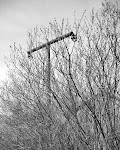
Okay -if you are reading, could whoever told me about spandrels pipe up. It's been resonating with my urban/suburban photography ever since, but I can't remember who first mentioned it to me...

In architecture as well as biology - and by extension, as a metaphor for accidental spaces in the city

"Dr. Gould and Dr. Richard Lewontin soon elaborated on the importance of how organisms are built, or their architecture, in a famous paper about a feature of buildings known as a spandrel. Spandrels, the spaces above an arch, exist as a necessary outcome of building with arches. In the same way, they argued, some features of organisms exist simply as the result of how an organism develops or is built. Thus researchers, they warned, should refrain from assuming that every feature exists for some adaptive purpose."


---------------------


There are four or five accepted and cognate meanings of spandrel in architectural and art history, all relating to the space between a curved figure and a rectangular boundary — such as the space between the curve of an arch and a rectilinear bounding moulding, or the wallspace bounded by adjacent arches in an arcade and the stringcourse or moulding above them, or the space between the central medallion of a carpet and its rectangular corners."


-------------------


"In the context of evolution, a spandrel is a metaphor for characteristics that are or were orginally side effects and not true adaptions to the environment. This metaphorical meaning works no matter which kind of architectural spandrel is referred to: the spandrel is the un-designed gap between other features, which is then often exploited for a use of its own."


(Tim Atherton)

Alberta Provincial Art Collection


Well, what's the use of a blog if you don't blow your own horn every now and then...

I had some good news today - the Provincial Art Collection of Alberta is acquiring (through a juried selection process) two prints from my Immersive Landscape series for their collection. It's always good to know someone else actually gets - and even likes - your work.

(Thanks the JB for all the help and to the Alberta Foundation for the Arts)
- thanks Dylan - they are of course available as limited edtion prints...


Wednesday, May 30, 2007

Mitch Epstein


I mentioned Mitch Epstein the other day and I realised it had actually been quite a while since I looked at any of his work.


There was a time when I looked at a number of his books, but I hadn't seen some of the more recent stuff. I remember when it came out, but I hadn't really looked at his whole series and book Family Business, which is very personal and has quite a back story to it.

I was 48 and living in New York when my mother called me about the fire. On a windy August night in 1999, two 12 year old boys had broken into a boarded up apartment building owned by my father in Holyoke Massachusetts and, for the hell of it, set it ablaze. The fire had spread, engulfing a 19th century Catholic church, then a city block.


The 15 million dollar lawsuit the church brought against him threatened to unravel my father's life. He had insufficient liability insurance. If he lost, my parents would be, in effect, after 50 years of a comfortable suburban life together, out on the street... more


I managed to get a copy of Family Business from the library and it was well worth it. Photography that is autobiographical very easily runs the risk of becoming introverted navel gazing and quite boring. This isn't.


In most ways, I think you can probably put Epstein int he same grouping as several of the other New Colour photographers - Shore, Sternfeld, Meyerowitz. I often find his work a little harder to notice, because what he does is often very subtle and needs spending time with. He also seems to photograph more people then many of the other New Colour types have done. He's often quite droll, and the irony is often more affectionate than biting. Indeed, there's a whole new generation of photographers doing this same kind of work now who you get a sense that they sprang right out of Epstein's work.

There are lots of pictures on Epstein's site (as well as here) as well as articles and reviews.

Tuesday, May 29, 2007

Simon Armitage


One of my favourite contemporary poets is Simon Armitage (though the one I'd really like to like but find almost impenetrable no matter how many attempts I make to read her is Anne Carson).

I'm just reading his recent book Tyrannosaurus Rex Versus the Corduroy Kid and the poems are by turns funny, moving and poignant

I'm also looking forward to reading his new translation of Sir Gawain and the Green Knight which I've enjoyed since I first read Tolkien's version many years ago. I wouldn't mind reading his new version of the Odyssey as well, but as good as our city library is, when it comes to poetry, if it's not CanLit, then they aren't likely to have it if it's less than 50 years old

KX

Northerner, this is your stop. This longhouse
of echoing echoes and sooted glass,
this goth pigeon hangar, this diesel roost
is the end of the line. Brace and be brisk,
commoner, carry your heart like an egg
on a spoon, be fleet through the concourse, primed
for that point in time when the world goes bust,
when the unattended holdall or case
unloads its cache of fanaticized heat.

Here’s you after the fact, found by torchlight,
being-less, heaped, boned of all thought and sense.
The camera can barely look. Or maybe,
just maybe, you live. Here’s you on the News,
shirtless, minus a limb, exiting smoke
to a backdrop of red melt, onto streets
paved with gilt, begging a junkie for help.

-o-o-o-o-o-o-o-o-o-o-o-o-o-o-o-o-o-

THE STONE BEACH

A walk, not more than a mile,
along the barricade of land
between the ocean and the grey lagoon.
Six of us, hand in hand,

Connected by blood. Underfoot
a billion stones and pebbles -
new potatoes, mint imperials,
the eggs of birds -

Each rock more infinitely formed
than anything we own.
Spoilt for choice - which one to throw,
which one to pocket and take home.

The present tense, although
some angle of the sun, some slant of light
back-dates us thirty years.
Home movie. Super 8.

Seaweed in ropes and rags.
The weightless, empty armour
of a crab. A jawbone, bleached
and blasted, manages a smile.

Long-shore drift,
the ocean sorts and sifts,
giving with this, getting back
with the next.

A sailboat thinks itself
across the bay.
Susan, nursing a thought of her own,
unthreads and threads.

The middle button of her coat.
Disturbed,
a colony of nesting terns
makes one full circle of the world

then drops.
But the beach, full of itself,
each round of rock
no smaller than a bottle top,

no bigger than a nephew's fist.
One minute more, as Jonathan, three, autistic,
hypnotised by flight and fall
picks one more shape

and, underarms the last wish of the day -
look, like a stone - into the next wave.

Monday, May 28, 2007

Fumimasa Hosokawa


I came across some info about Fumimasa Hosokawa last year I think it was, when he had a joint show in Pittsburgh with another Japanese photographer. I'm glad I saved a couple of the images that were online, because I could find almost no other ones online. He was also featured at PS1 in a show of "emerging" Japanese photographers.


There is a reference to his book Anonymous Scapes which I'm figuring out how to get a copy of - and there's probably some more stuff in Japanese I probably missed.


The show in Pittsburgh was Unspoken Ground: Two views of Japan at the Silver Eye Center for Photography and I did find a piece form Art in America about it:


"...In Fumimasa Hosokawa's more conceptual project, the artist researches public records going back 100 years to find obituaries of people who died on the streets in and around Tokyo in accidents, fights or from illness. Hosokawa visited the locations--determined from the descriptions and addresses in the obituaries--and photographed the sites in black and white in an "official-looking" documentary style. Both photographers point their cameras at should-be populated areas--city streets, construction sites--yet all the settings in the more than 30 works in this show are deserted. This in itself is not particularly unusual. But Kobayashi and Hosokawa focus on the implied interaction of human and site.


...More poignant than formally beautiful, Hosokawa's 22 gelatin silver prints each show the obituary that inspired the accompanying image. (The gallery placed English translations on the wall beside each piece.) He provides the forgotten histories of the locations, but because the images don't always seem to correspondto the narratives, the texts often read more like poetry than death notices. In 1901, for example, a photograph of a characterless paved road with parking signs and a smattering of trees in the background is accompanied by text describing an "approximately 60-year-old man, with thin hair, a 'low nose,' wearing an unlined livery coat ... discovered at this location, 'dead from disease.'" The photograph 1961 shows a small bar nestled between two modern high rises, where an unidentified woman with "a round face and long permed hair, carrying a Shiseido lipstick and a green comb" was found dead on the tracks, now covered up, after being struck by a train near Itabashi Station. In this compelling exhibition, a visual and conceptual dialogue unfolds between the works of two photographers who investigate the effect of human activity on this planet." full article


War then and now - follow up


Just a short follow up post on War then and now

American Photo's State of the Art blog has a short post for Memorial Day - Why We Don't See the Real Story from Iraq

Among other things it says this:

"...He also notes that since last year the military has enforced new embedding rules that require photographers to obtain consent from wounded soldiers before images of them can be published. In effect, this means photographers must get soldiers to sign wavers before they are even injured--an absurd kind of Catch 22."
which is beyond bizarre... lets wipe the Death of a Loyalist Soldier form the official record - I don't think Capa got a release from the guy between his being hit by a Republican bullet and his hitting the ground

Sunday, May 27, 2007

Almanac - new online mag


(Misty Keasler)

I think it's a good thing, but the internet makes producing a magazine - albeit online - a relatively low cost proposition compared to actually printing and distributing an actual ink and paper one.

Of course this leads to some really bad ones coming along (not that that doesn't happen in the "real" world as well). And then some also come along that a good but only last a few issues.

Anyway, I got an email this week from the Chris Callahan & Benedict Fernandez - the people who are producing Almanac, a new online photography magazine

And although it's a Flash site, it's one of the few that actually works well - that is, it basically operates in the background and the damn website doesn't dominate the work. They should get some kind of award for that alone...

The magazine so far also seems worth a look (I actually like Petra Berger's essay - although the über-grainy bits are a bit ott - but I have childhood memories of old racing cars, so it's probably what all that's about - and she basically seems racing car obsessed). The Leonard Freed interview is also worth listening to I think.

Oh and this is issue #2. Number one is also worth a look too (with a Diane Arbus interview). Not too shabby for a startup.


(Petra Berger)


Saturday, May 26, 2007

Shoot an Iraqi - Wafaa Bilal's Domestic Tension


This is worth a look http://wafaabilal.com/ Wafaa Bilal's Domestic Tension


...until June 4, Bilal is living his entire life inside one room at Chicago’s Flatfile Gallery, which anyone with a Web connection can log on to watch. Oh, and to shoot him. With “Domestic Tension" Bilal has turned his makeshift living quarters into a 24-hour-a-day war zone. Viewers can peep in on him anonymously at any time, and even chat with him online. On the installation’s Web site, his audience can fight for control of the camera and pan it around the room. Since the camera is affixed to a rifle-sized paintball gun—and the Web site has a button that allows viewers to fire the gun—they also have the opportunity to shoot at him, or anything else in his room. Which they have done an astonishing 40,000 times in the project’s first two and a half weeks... from Newsweek


also here and here


Thursday, May 24, 2007

Photos of old barns


I have to admit that The Onion is probably my favourite news source (I especially like that one US police department once put out a warning about Al Qaeda fundraisers using telemarketing, based on an Onion story... I'm sure there have been others).

Every now and then they are good at lampooning and skewering photography. The magazine cover above for one, and catches the whole side of photography - lets call it Guild Photography - which seems to have as it's sole purpose endlessly repetitive photographs of old barns in fields, white New England churches, Mexican colonial doorways and cloisters, nudes languishing on a rock/against a tree in the forest or yet another picture of Yosemite. In these, much thought and often monumental effort goes into choice of camera, lens, film developer and paper.

Often, the larger the camera the better. Great kudos is attained by lugging a bloody great 20x24 camera into he middle of some prairie field or the Everglades. Even better if the photo can be made using some kind of alternative process - a van dyke print or platinum maybe. The aim, of course is to enjoy the journey, not the destination. To satisfactorily expend a lot of enjoyable time and energy making another photo that replicates one of a large swatch-book of images that were already cliches by the 1890's. Which of course matters little tot he Guild practitioner - it's the fun and satisfaction they get out of it that matters - and more power to their elbow for that.

Finally, here's another area of photography that the Onion applies it's dry wit to - School Portrait Photographers:

Seminal School-Portrait Photographer Dies At 92

PHOENIX—Henry Anszczak, the photographer whose influential work revolutionized modern school portraiture, died Sunday at his family home in Eloy. He was 92.


According to longtime assistant Dave Olsen, Anszczak died of natural causes.
"On Sunday, Mr. Anszczak passed away peacefully in his sleep, surrounded by his family and scores of yearbooks," Olsen said. "We will never forget his wonderful artistic achievements. He blazed the trail for thousands of school photographers nationwide. The lion of 20th-century public-educational culture roars no more." ...

Anszczak was the first to present his subjects as individuals, rather than as one tiny, grainy part of the class as a whole," said Geraldine Menzies, director of the National Academy of Classroom Arts in Philadelphia, where many of Anszczak's works are exhibited. "He lifted the school-portrait camera from its rigid confines and moved it several feet closer."

Fresh out of the Army in 1946, armed with a Graflex Speed Graphic camera and a tripod, Anszczak began his school-photography career relatively late in life. The 34-year-old entered a stagnant field, where the standard practice of shooting black-and white snapshots of entire classes from a distance had gone unquestioned for decades. While it saved on film and developing costs, the process resulted in a final portrait in which many subjects were out of focus, too small to see, or obscured altogether. When Anszczak retired in 1986, he left a field that had fully embraced his color close-ups and woodland backdrops.

Anszczak is credited with having invented the classroom composite, in which many small, rectangular portraits are arranged in rows for display. "Anszczak single-handedly standardized the wallet-size," Menzies said. "It was his discovery that, in addition to a 5"x7" portrait suitable for framing, a student might like a number of smaller photos to offer to those peers with whom he or she plans to remain best friends forever." ...


Anszczak was the first school photographer to offer matte finish. He was the first to seat subjects on a stool, to direct them in proper placement of their hands, and to offer them the use of a black plastic comb before the photo was taken. He pioneered use of soft-focus, previously seen only in Hollywood glamour portraits, in senior-year photos. And he introduced the now-famous "fence post, wagon wheel, and bale of hay" tableau, which became an industry standard.

"Scholars debate whether it was Anszczak or his assistant who invented the double-exposure, in which a profile of the student's face appears over the shoulder of the forward-facing subject," Menzies said. "But there is no question that they were the first to use the technique in the portable studio."

Anszczak's innovations, now universally accepted, were initially criticized. Parents thought that the individual close-ups bore an uncomfortable similarity to police mug shots. Additionally, many argued that the process of focusing so closely on the subject placed students under undue stress.

Following the Vietnam war, a new batch of critics argued that Anszczak's work had reactionary, antisocial tendencies. In a famous essay for Mrs. Larsen's tenth-grade English class at Sherman High School in Little Rock, AR, sophomore Wayne Kleiff derided the photographer's individual portraits as "a physical manifestation of the isolation produced from postwar suburbanization." ... more

War then and now


This
story about soldiers from the 10th Mountain Division in Iraq was linked over on Conscientious - with first class reportage from Michael Kambar of the NY Times (all pictures here his except the last two). A patrol searching for missing US troops is itself ambushed and takes fatal casualites. As Conscientious notes, the Times is having a Vietnam Moment.

Up until perhaps 10 or 12 years ago, a story like this might have received several consecutive pages as photo essay in Life or Time or Newsweek or the Observer or Paris Match. Now, while the flash slide show and sound is very good to watch - and I haven't seen the issue of the NY Times the print story is in, I wonder if it has the same impact as that "old" photo essays did?


I wouldn't be surprised if more people actually watch the flash video than would have seen the story in Life (okay, I'm not 100% sure on that). But I also wonder if watching it on a computer screen - at work, in the home office, has quite the same impact as the story laying there on the kitchen table, or the coffee table, or in the dentists office, to be leafed through several times, and maybe leafed through again when you come across it a few months later when you are clearing out the magazine rack?


As someone recently said, analogue (and maybe print - even if the photos were originally digital) is about traces, digital is about flow. I wonder if these things now flow past us too quickly on the Internet. Maybe we need the traces to linger longer in our hands and homes and memories?

(And as Joerg said, watch it now before it disappears behind the NY Times commercial firewall - another thing that didn't happen with your old copies of Life...)


(Larry Burrows)

I don't think I'm just being nostalgic here for the "glory days of photojournalism". Despite all the information quickly and easily available now, there seems to still be a substantial difference - flow and trace.


Wednesday, May 23, 2007

How Photography Lost Its Virginity on the Way to the Bank


I'd seen a couple of articles about Duiane Michals new book Foto Follies: How Photography Lost Its Virginity on the Way to the Bank:


Of this satirical look at contemporary photography, Duane Michals has said, "The more serious you are, the sillier you have to be. I have a great capacity for foolishness. It's essential." Whether parodying Wolfgang Tillmans or Andres Serrano, Sherrie Levine ("A Duane Michals Photograph of a Sherrie Levine Photograph of a Walker Evans Photograph") or Cindy Sherman ("Who is Sydney Sherman?"), Michals uses his ferocious wit and keen eye to create images at once humorous and penetrating. As "The New York Times" described "Gursky's Gherkin," the work "explores as never before the sense of picklehood, or what it means to be a pickle." The "Times" also testified that "this high-humored sendup of arty photography should be required viewing for all art-world heavies, particularly critics, curators and collectors." Michals takes aim at pretensions that are often perceived as deliberately obscuring contemporary art, and in doing so he exemplifies his mastery of both the visual world and the written word, while providing the elemental pleasure of a good laugh.

than I came across this post about his talk at the Strand on The View from the Edge of the Universe - and I just had to list Michals' quotes:


"At 75, he pretty much calls it like it is... Here are several of Michals' comments:


"I've always relied on the kindness of ideas"


"Everything you think makes sense doesn't. Get out of the fuckin' box."


"My gift to you is that I'm not you"


"As long as you believe in consensus reality, you will never experience true reality"


"What a cheap joint, I have to do my own slides" .... and .... "Jesus, what do I have to do to get fucked around here"


"You are the alpha, the omega. You are the event"


"You affect what you see through the participation of your observations"


"Have you ever thought about the not-nowness of now?"


"I love to photograph what cannot be seen"


"Reality is not a set of observable facts walking down the street."


"Photography is not about looking, its about feeling"


"Can you imagine defining your life so narrowly that Nirvana is sex with 72 virgins"


"Someone just paid $3 million for a Gursky. $2.5 million I can see, but 3?"


"You should always be a beginner"


"I love ideas I've never thought of before"


Tuesday, May 22, 2007

Edward Steichen Autochromes come to light


Interesting story in the NY Times on two Autochromes by Edward Steichen (via the LF list)

"At first glance the two pictures seem to be gorgeous anachronisms, full-color blasts from the black-and-white world of 1908, the year Ford introduced the Model T and Theodore Roosevelt was nearing the end of his second term...

...Almost as intriguing as the pictures themselves, however, is the story of how they recently made their way from a house in Buffalo, where they apparently sat unseen for decades, to the collection of the George Eastman House in Rochester, one of the world’s leading photography museums, where they will be exhibited for the first time this fall.

Eastman House has a substantial collection of Steichen works, including 22 of the same kind of color photographs, known as autochromes. But when Anthony Bannon, the museum’s director, received a call last summer from a Buffalo lawyer, who said his client, Charlotte Albright, a 96-year-old painter, wanted to donate three examples of what were probably antique glass-plate negatives, Mr. Bannon assumed they were the works of her mother, Charlotte Spaulding...

...In August Mr. Bannon drove to Buffalo to meet the lawyer, Robert J. Plache. Because of the two men’s erratic schedules, they arranged on the fly to meet in the parking lot of an ice cream parlor in a Buffalo suburb, where Mr. Plache emerged from his car with a plastic-wrapped package.

Upon opening it, Mr. Bannon saw that one item inside was a Spaulding glass-plate negative. Then, almost immediately, he realized that the other two 5-by-7-inch pieces of glass, portraits of a beautiful young woman in an Edwardian gown
and pearls, were not.

They were Steichens, one of them signed... more

As someone pointed out, the first one is decidedly Klimt-ish


Miscellanies


Yesterday was a holiday here in the great white north - Victoria Day - yep, we still celebrate Queen Victoria's birthday (who btw was a great patron of photography).


Far better than what the dung beetle rolled in (i.e. Adobe Acrobat 8) - Nitro PDF seems to do a far better job for most of what I want to do so far, is simpler and cheaper..


Mitch Epstein bid on my Phillips Explorer - didn't win it, but that would have been kinda cool - I'm sure wooden cameras have a memory. It would have been neat to see how the echoes from my work subverted his :-)


(mitch epstein)

Comments?

Apparently the comments option for posts has disappeared... It's still set as an option in the control panel, so I'm going to have to try and figure out what's happened...hmmm

- well, for some strange reason the three preceeding posts won't allow comments - feel free to comment here on them if you wish!

Monday, May 21, 2007

More on the the Humble Arts Foundation


(Dana Miller)

Since Julian Thomas linked in for me to the picture he had in one of the Humble Foundation's group shows, I've been able to hunt around the work of a lot of the photographers they are dealing with and their work.


(Matt Lucas)


(Andrea Chu)


There's some very good stuff hidden in there - a much better selection of new work - imo - than at many other venues. Someone certainly has a good eye and it's a pretty good cross-section of people to keep an eye on. Good stuff . In fact, it's great if they can continue showing and supporting this kind of work.


(Meredith Allen)


Okay, and I've got to ask - apart from the emails I've recently started getting from them, has everyone else been seeing these monthly shows for ages as they come along and I've been living in some kind of bubble..?


(Adi Lavy)


(Bryan Schneide)


Sunday, May 20, 2007

5B4 - Photography and Books

Time to point to a new blog - 5B4 - a blog a bout photo books. It's pretty prolific so far, so I hope the author can keep it up.

There are a lot of quite in depth reviews, and an eclectic selection of books.
A few of my favourites so far - a selection of books about Walker Evans at work


Swiss Policeman Arnold Odermatt's (who I talked about here) new book On Duty


And John Davies The British Landscape


But there's also Laura Letinsky, Tony Ray Jones, Friedlander and many more.

And the writing about books is good - here's a sample from the Odermatt review:


"Armed with Rolliflex cameras and color film, Odermatt “documents” his buddies laying speed traps on highways, looking over files of fingerprints, taking part in water rescue scenarios, and investigating car accidents. I say “documents” because most of the images are staged. The participants literally acted out moments from their daily routine under Odermatt’s direction.

All members of the force are in on the fun and are obviously having a great time playing their individual parts in these small photo plays. Their postures and poses indicate their “ideal” image of what they must actually look like when performing these duties in real life. This creates a sense of stiffness in the photos. It is as if the individual personality of each man has been removed and we are left with a group of law enforcing automatons. This quality adds a great deal of humor to these images.

Even though the acting may be stiff, or Odermatt’s ability to direct people is poor, he is a hell of a natural photographer. These images use the vocabulary of advertising images with their clear and sharp descriptions and enticing color palette, but are often so well made that they are not of the lowest common denominator. Odermatt uses all of the information in the frame to his advantage. These are not just pictures where the subject dominates and the rest of the frame or background description is left without regard. From foreground to background, side to side and top to bottom, these frames are masterfully constructed.

Often we are faced with the absurd. Whether conscious of it or not, Odermatt has a flair for organization and timing that creates an absurdist humor or drama to some of the photos. In one, a man aims a machine gun while wearing full protective vest and head covering while in the background a neon blue water pitcher (the brightest color in the frame) mocks the shape of the head covering and the barrel of the gun. In another photo, two chalk outlines of cars are left alone on the road and look as if they themselves have skidded and crashed into one another."
Of course, you are probably going to end up buying more books...

Saturday, May 19, 2007

Michael Wesely... oh, no, it's not


At first glance, these "Netropolis" pictures look to be Michael Wesely's, of the reconstruction of Berlin, re-modelling of MoMA - but they aren't.

In fact they're by Michael Najjar (a funky if slightly annoying website...). He has a lot of other stuff on his site - most of it a lot slicker and some rather more conceptual (I rather like the idea of his Iraq pictures, but not quite their execution)


Back to Netropolis, whereas Wesely produced his pictures from a fixed point with long or multiple exposures, Najjar takes multiple images and combines them:


"The complexity of the city is visually apparent in Michael Najjar's multi-layered photographic prints. Like Fritz Lang whose 1926 film Metropolis envisioned the futuristic city, Najjar’s Netropolis series carries the notion a step further, positing the city as a locus of computer networks and digital information. In Netropolis/Shanghai, 2003, he photographed from the tallest building in the city of Shanghai. Using a conventional camera, Najjar shot to the north, south, east and west. These images were converted to digital files and combined into a single image that was manipulated on the computer. In the final stage the work is converted back and produced as a traditional silver gelatin print. The resulting image gives the viewer a sense of seeing through time".

(There are more detailed descriptions of his work on the website - but it's all Flash junk)

Friday, May 18, 2007

What exactly is the humble arts foundation?


I started getting emails from the humble arts foundation (barely a capital letter to be found on their site) as a result, I think, of this blog.

Informing me of their shows and projects. They have a website up with some information "about us" and their founder Amani Olu. And some of the photography is quite interesting - Amy Stein for one has been up in their shows.

But I'm still not entirely certain who (or perhaps better what) they are.

"a not for profit organisation that seeks to advance the careers of emerging photographers by providing grants, professional support, and exhibition and publication opportunities...". The internet in one way or another seems to have encouraged a number of these sorts of ventures (they often seem to revolve around Flickr in some way). None quite exactly the same, but most apparently philanthropic in some way towards artists. Jason Fulford of J+L Books would be another example - a publishing house run as a not-for-profit (or at least it was last time I looked). Some more overtly capitalist (such as Jen Bekman?). It sounds good - certainly good for artists and photographers- and I certainly hope it is.

Now I'm not suggesting their anything nefarious about all this, just that my Late Baby Boomer/Sputnik Generation brain is having a bit of trouble wrapping itself around it all... But I'm left with a little feeling of mystery about it all. Who is getting what out of it? The artists I hope. I'm also wondering about the success of them - it must be something of an uphill struggle to get something of this nature going and keeping momentum.

But if all this good stuff is the case, then I'm all for them!


POSTSCRIPT - rather than post this in the comments, which nobody ever reads, I'll post this here. First, Julian Thomas made a helpful comment about Humble 9see comments). And also Jon Feinstein from Humble responded:

Thanks for blogging about us. I completely understand the mystery of it all. With so many "organizations", blogs etc popping up left and right I think it is completely fair to view some with skeptisism. Our main goal is to gain further exposure for photographers we work with, whether it be through publications like STORY, online press, online and physical group shows, or grant opportuities (coming in the fall--stay tuned!)... ,Jon Feinstein Curatorial Director


Julian's recommendation is good value for one thing...

And it wasn't my intention that the post come across a skeptical or even cynical - more captiously curious (maybe from having been burned by "art" start-ups in the past...) but certainly a genuine curiosity about how this is all being fuelled (hopefully sustainably) - I'm guessing lots of youthful energy among other things? All the more so in an age when artists are being asked to plonk more and more dough on the table (reviews, curatorial" competitions", publication) - $40, $50 $60 or more just to get someone to look at their work - which I actually notice an absence of at Humble so far. And it certainly looks good. The more of this kind of thing that "on the side of the artist" the better imo

POST-POSTSCRIPT... Just for Julian, here's one curator's take on Portfolio Reviews:
...they had entered into an informal partnership, planning regular portfolio reviews and inviting curators, editors, art buyers, agents, and gallery owners to be the reviewers. Neither had lofty expectations about discovering the new cutting edge of art photography in the process, and occasionally it all began to seem like a terrible waste of the photographers’ money and the reviewers’ time; on the upside, though, there was a fair amount of networking amongst the reviewers, and a few additional collaborations sprang up out of it. A. and J. spent their lunch breaks discussing current exhibitions, ideas for various projects, and their own careers...

Thursday, May 17, 2007

Mark Klett's Rephotographics


"We now view landscape photographs, both past and present, much like the shadows on the walls of Plato's cave. They are artifacts of what we think we know about the land, and how we have come to know it." Mark Klett.

Klett is now apparently beyond his Rephotographic Survey Project, the re-photographing the work of the likes of O'Sullivan and W.H. Jackson on the various historic Western Surveys, and on to a re-re-photographic project, what he calls the Third View


I find I really want to like Klett's work but have a hard time completley doing so. The original RSP project was a fine and innovative idea, as well as something of a reaction to the New Topographics movement of the same era (although I must say I think the two groups actually have more in common than they like to admit).


But at times it all seems like a good idea pushed a bit too far to the Nth degree. The rephotographing of Muybridge's historic panorama of San Francisco sounds like a good idea on paper - but I don't feel it quite worked. And the Third View seems much more valuable to the participants than as a wider, more public work. Indeed, Klett explicit likens it to field work with students as with other disciplines such as anthropology or archeology. And in truth, we all know that the value of much of the student work on such trips are often mainly educational - and that Professors easily get bogged down and prevented from following their own course of research as rigorously as they could or should. There is a sense as well that it is trying to adopt a sort of scientific methodology for the project, but without abandoning the chance and poetry such photographic endeavours generate - but that it somehow doesn't always manage to get the best of both worlds. (either way, the Third View website has lots of interactive stuff on it that you can hunt around and enjoy).


And yet despite all this, there are many of Klett's individual images that I really rather like - occasionally whole sequences. His project Ideas About Time, for example (I'm not sure if that may be one of the personal projects that is pursued alongside the "official" survey work of the Third View work?). In fact, apart from the general essence of the original RSP, I find it is Klett's more personal work that appeals to me.


Photoeye has a gallery of quite a number of his images, with links to his books. I also came across an interesting essay on his work - a few quotes:


"...But perhaps the greatest conceptual achievement of the Rephotographic Survey Project, with their seemingly affectless pairs of images, was to create stereo "photographs" in the fourth dimension, their exposure time a virtual century. The real interest of these pairs is typically the space in-between, where all the changes occurred, or failed to. Are the housing developments and highways that appear, and the mines that occasionally disappear, developments or depredations? From the point of view of a century, the distinction begins to dissolve. Sometimes the absence of change is most salient. On isolated mountainsides the positions of individual rocks can be compared across what is, after all, only a blink in geologic time.

In one of his most deftly tongue-in-cheek tales, Argentine writer Jorge Luis Borges tells of "Pierre Menard, Author of Don Quixote," the twentieth-century Symbolist poet whose magnum opus consisted in the precise recreation, in flawless seventeenth-century Spanish, of select chapters from Miguel de Cervantes's classic novel, Don Quixote. "He did not want to compose another Don Quixote--which would be easy--but the Don Quixote." This was not to be a matter of copying, either. "His admirable ambition was to produce pages which would coincide--word for word and line for line--with those of Miguel de Cervantes." Needless to say, he did not bother to reread the "original" first--that would be child's play. His goal, rather, was to discover whether a seventeenth-century literary masterpiece could be written in the twentieth century. Or, in Menard's own words, "I have contracted the mysterious duty of reconstructing literally his spontaneous work." Because of the irony of this circumstance, Borges's narrator in sists, "The text of Cervantes and that of Menard are verbally identical, but the second is almost infinitely richer." Indeed, he goes so far as to venture, "I often imagine that he finished and that I am reading Don Quixote--the entire work--as if Menard had conceived it."

Klett had also contracted the mysterious duty of reconstructing literally what his predecessors did spontaneously, and in doing so he has enriched the historical record with countless ironies. (Not least of them, as Verburg wrote in Second View, was that, "Unlike our predecessors, we did not take what we thought would be appealing shots." ) In the context of this oddly Borgesian enterprise, the question naturally arose, what would it be to conceive a photographic survey of the American West today, when the frontier is long closed and none of the original purposes--assessing the land's mineral wealth and its potential for defense and development--can realistically be served, but the consequences of these projects are more or less apparent? As it was for Menard, copying was the path to creation for Klett. The way to mount a latter-day photographic survey of the West that would not simply prove received assumptions about land use (like so much of the New Topographics work against which the RSP chafed) was to copy the classics, word for word, knowing the inflections would be new with the passage of time. Never mind that the nineteenth-century surveys, led by scientists like Clarence King or military men like George Wheeler, were not strictly photographic surveys--they were geographical and geological surveys that took photographers along. The RSP never followed the routes of the original survey parties for long--instead they honed in on the photographers they admired and followed in their footsteps, willfully begging the question of how much agency these individuals had. By repeating views, they established that O'Sullivan in particular was not above twisting his camera dramatically to make natural conditions, like the slant of a hillside, conform to his ideals of wildness. They brought the historical record to life, putting it in the hands of working photographers..."


and of course, there's always the Twin Peaks rephotographic project...

Wednesday, May 16, 2007

The Scene of the Crime - Julian Thomas


After jotting down my thoughts recently about photography, traces, evidence, crime scenes and so on, it had completely slipped my mind the Julian Thomas has a series called Scene of the Crime which I really rather like. Among many other things they capture a certain English melancholy - there is also something foreboding about them.

Julian also has it "published" by Democratic Books. You can download the pdf and print it yourself - pretty neat. It was actually the pdf I came across downloaded ages ago on my computer when I was searching for something else. Now I have time, I'm going to print it out.

For those who have suffered times of emotional or psychological illness, recovery is a slow process. A major difficulty lies in the fact that the site of the problem is the body, but nothing can be touched, healed, or removed. One becomes a combination of victim, judge, jury and detective. 'Getting better' is a process of stumbling through images from the past and trying to make sense of a collection of often seemingly unrelated fragments

At some point in the recovery process, you have to go back - back to the scene of the crime. The images in this series are an account of such a return. They are clues, totems, representations of emotions, symbols, dialogues, inner narratives, and sometimes, fragments from nightmares.


You can also look through more images on Julian's site.


Gursky yet again...


After my brief bout of Gursky dissing yesterday I came across Chris Jones' view of the Gursky show/new work on his blog (Chris is a Canadian photographer living and studying in London).

So, an alternate viewpoint:

"Lend Me Your Retina

The White Cube opened a new show of Andreas Gursky's photographs on Thursday. It is powerful stuff, an experience of sheer retinal overload and visual opulence. The pictures are even bigger than before, approaching bill board size. The image above is of a massive water tank / neutrino observatory; the scale becomes obvious only when one notices the two small boats in the lower right.

A lot could (and maybe will) be written about the work's dependence on the retina. The force with which the image presents itself to the viewer now obscures whatever currency Gursky's images used to have as documents of global cultural landscapes. The spectacle in each photograph is amplified to a point where it disengages from a discourse about representation. His image of Pyongyang..., for example, contributes little to a discussion of developments in the East, in the way that Edward Burtynsky's images of China do. It is a matter of visual spectacle. This point is a fulcrum, upon which the viewer's art experience will balance or fall...

This has to do with Gursky's use of the potential of digital technologies to achieve his vision. To begin with, he approaches images now, as most photographer artists do, without the constraints of the frame. Images are constructed using various instances or perspectives, assembled into a final frame, but coming from many. This is representative of how in the age of digital new media, the traditional notion of the image has become obsolete. The frame has been exploded, images become programmable.

...This image (of the "James Bond" islands) is a composite of many pictures taken of various islands. Some islands appear in the image twice, but from different perspectives. The resulting assemblage has an uncanny balance, because the perspectives are not quite perfect, and our eyes are very attuned to this." more here
I'm interested in ways of blasting a way through the perspectivism that holds photography in it's grip. I'm not quite sure that was Gursky's intent in this case, and without seeing the (massive) works first hand, I'm not sure if it manages to do it.


Tuesday, May 15, 2007

Charlotte Cotton moves to LACMA


Charlotte Cotton, who recently wrote the interesting essay The New Color: The Return of Black-and-White is moving to the Los Angeles County Museum of Art as department head and curator of photography.

Cotton, who is a Brit, 36, studied at the hotbed of British photography at the Brighton University and was then a curator at the Victoria & Albert for twelve years, then at the Photographers Gallery in London, before moving tho Art + Commerce in NY.

Cotton has also written a very good book The Photograph as Contemporary Art. As the LA Times puts it, Cotton is from outside the set of usual US curators who tend to move from museum to museum on a single track.


"Charlotte's career bridges the traditional and the contemporary. That is her real strength," said LACMA Director Michael Govan. "At the Victoria & Albert, she dealt with a collection of some 30,000 photographs that has great 19th century and early 20th century material, so she had a real grounding in a big museum collection and historic work. Then she gave it up to experiment and learn more about photography in the contemporary world. She has had huge experience, and she has taken risks. That's a good combination."...

"Charlotte is articulate and thoughtful, young and sensitive," Govan said. "She has a lot of her career ahead of her. Part of my interest in her is curiosity about what she would do with all that. When I met with her, it was clear that she had a real passion not just to be in a major museum, but to be in Los Angeles. That in itself seemed like such a right fit. It wasn't just the museum; it was that Los Angeles was such a fantastic place to explore questions of photography's changing role."

This is a pretty good move for LACMA and photography on the West Coast in general. LACMA has a reputation for being rather less stuffy than many other museums, and this builds on that. Exciting possibilities. For my money, Cotton is one of the more forward thinking curators and critics of photography out there right now.

Adobe Acrobat 8 - rolled in by a dung beetle...

I used to have a full version of Acrobat 5 or 6, but it seemed like it wasn't tying up with all the new Acrobat options so I tried installing the trial version of Acrobat 8

What a bloated piece of crap!

Back to Acrobat 6 now...

Is Gursky spent?


(Note - see the follow up post here)

I took the latest Modern Painters with me to read at the cottage a while back, optimistically thinking that with a 3 and a 5 year old, the lake ice just melted, bugs, frogs, porcupines and bunnies everywhere, dead-falls to clear and plumbing to fix I would actually have time to read it...


So, I finally got down to reading the glowing article on the new Gursky work yesterday (there's also a good little piece on Boris Mikhailov). And today I find a link at Winkleman to a somewhat (though not entirely) critical review in New York Magazine - "It’s Boring at the Top" - of the new Gursky show at the Matthew Marks Gallery (and here):


Is Andreas Gursky—the highest-priced photographer alive—running out of ideas?

The German über-photographer Andreas Gursky was the perfect pre-9/11 artist. He excelled at portraying the border-to-border, edgeless hum and busy obliviousness of modern life, what Francis Fukuyama ridiculously declared “the end of history,” George W.S. Trow called “The Context of No Context,” and Rem Koolhaas dubbed “Junkspace.” Not only did Gursky seem to be critical of all this, but his handsome images of trading floors, hotel lobbies, raves, and landscapes were charged with a visual force and intellectual rigor that let you imagine that you were gleaning the grand schemes and invisible rhythms of commerce and consumption. His amazing picture of a convenience store brimming with goods, 99 Cent II, Diptych (2001), which recently became the most expensive photo in history when it was auctioned for over $3.3 million, fizzed like cherry cola but packed the formal power of a Monet.

Unfortunately, as smart and deft as this artist still is, that fizz has gone flat, the power has run low, the former buzz has become a drone. The times have changed, but Gursky is still trying to render purring pre-9/11 space, where commerce ticked along without an undercurrent of fear. But his rigor and criticality have been replaced by grandiosity and theatricality; figures feel frozen; compositions are stagy; structure devolves into carpet like pattern. Gursky’s new pictures are filled with visual amphetamine, but now they’re laced with psychic chloroform. He’s such a serious artist that this amphetamine is singular enough to sometimes offset the deadening effects so that his pictures occasionally impart a poetics of numbness and stupefaction...


...Gursky has digitally pieced together numerous shots from various locations, including his studio, making F1 less a photograph than an invention, and what’s tedious about it is how coyly self-referential it is. Directly above the pit crews are onlookers in a glassed-in observation deck. Many of these folks take photos; a few have their hands against the clear surface of the skybox. Thus, the frontality of the image and the idea of multiple views of one subject is stressed. Standing between the crews is a sexy blonde in lace-up leather stilettos, hot pants, and a skull on her low-slung belt buckle, which is conveniently positioned almost at the center of the picture. Is Gursky implying that men are drones and women are merely saints, sluts, sirens, or fodder for fashion photography, cheesecake, and pornography? Or maybe he’s admitting that he’s out of ideas.


In this I tend to agree on the whole. I remember the excitement when I first encountered Gursky's work - leafing through the books and articles several times - renewed when I saw my first massive Gurskys at the Tate Modern, but I haven't felt the same rush for some time now, while still enjoying - and being inspired by - that first big section of work. What now it seems? As Ed Winkleman says in a slightly different context "He used to be so bleeding edge, and now he's really just riding that wave, churning out signature work with a seasonal/fashionable update every so often."...


BTW, for my money, Thomas Struth's less flamboyant working away at his various projects is still bearing fruit and seems to have much more staying power. Though I also hope Grusky gets his rhythm back and gets back in the groove with something new and good - there is still something about his work - even this new stuff - that can mesmerise you.


POSTSCRIPT: I notice Joerg at Conscientious has picked up on the comments about the new Gursky show (which, of course, almost none of us have seen first hand...). He seems a little worried that we are in danger of treating artists like entertainers. Leaving aside for now the strong argument that could be made that regarding artists as entertainers is nothing new and sometimes appropriate, I want to compare the response to Gursky's new work with that to Thomas Struth's new Museum work. Struth takes an old theme of his - people and museums - and works it deeper and more effectively. On the whole the reviews of Struth's new work have been positive (extremely positive in many cases) - Adrian Tyler just described the Prado show to me as "exquisite", but Struth is essentially doing the same thing here as Gursky in terms of artistic process. Expanding the work of an existing them. Yet as far as I can tell, Struth seems to been much more successful at doing so.

I mentioned the Modern Painters review of the Gursky work - I came away from it empty. It very much felt as though the writer was having to go through all sorts of convolutions using ancient Chinese concepts of blandness (which in itself might be an interesting thread to follow) and quoting Barthes in order to try an justify Gursky's work. Indeed I'm sure the Gursky work is impressive first hand. I'm just getting the feeling it isn't as good as what he's done before and is a bit of a misstep.

Finally the Guardian, while slightly more restrained about the Gursky work, was not exactly enthusiastic:

...In his most recent work, Gursky has employed digital technology, resulting in even more crisp detail as well as the potential to manipulate the image. Kamiokande (2007) portrays an underground chamber designed to detect the smallest-known particles in the universe, the extraordinary architecture and scale of the chamber determined only by two tiny figures at the bottom of the picture. Elsewhere, the extraordinary natural poeticism of the James Bond Island images seduce, even as you try to spot Daniel Craig in his swimming trunks.

Gursky has visited Japan, Thailand and Korea in preparation for this show, apparently in pursuit of new subject matter to satisfy the potential of new technology. It makes you nostalgic for the ordinary everydayness of his earlier work, whose honesty seems to have been lost in the quest for the more extraordinary image.

Monday, May 14, 2007

Richard Mosse, Phillips Explorer 8x10 and Thomas Struth


This post isn't quite the mishmash it appears to be from the title...

I'm reluctantly selling my lovely little Phillips Explorer 8x10 (starving artist mode for the next few months - gotta buy film and feed the kids...). It's up on ebay and I ended up getting an email about the sale from a young Irish photographer Richard Mosse who is studying at Yale.


I found his website and it turns out he has some funky stuff up there. I'll be interested to see how his work develops over time.


Oh - and Richard also told me that Thomas Struth gave a talk at Yale recently and when asked, replied he uses a Phillips Explorer - aww man - did he have to tell me that - talk about separation anxiety...


(this last picture - Struth - from Paradise)

Sunday, May 13, 2007

China Watch update

(FENG Bin)

I recently mentioned some of the photographers emerging out of China and being noticed in the West. As a result of FotoFest Beijing, Chinese photographers seem to be on everyone's radar - and rightly so imo - I find all this "new" (to most of us anyway) photography pretty exciting.


(SHUM Dustin)

Joerg (who has been tracking Chinese photographers for some time now) has a good selection of links.


(Birdhead)

Photoeye/Photoeye Galleries is involved with the website linked above "new Internet platform for contemporary Chinese photography"


(LUO Dan)

There's definitely some good stuff in all this


(LI yu)

Saturday, May 12, 2007

Kodak Duabubble lens at Coney Island


Cool - okay, so I have a love hate relationship with Flickr (well, closer to hate hate...). As Martin Parr said, there's an awful lot of rubbish to wade through to find anything half decent. There's a side of me that enjoys this playign around with clunky/funky old lenses (or almost lenses) and obscure processes

Via Joe Reifer, this few picture by J.E. Piper. Piper (aka Raven Cat.. those Flickr names are one of the things that are like chalk on a blackboard for me...) says:


"Experimenting with photo processes from the 1840's, and a homemade camera that has a Kodak Duaflex viewfinder glass "bubble" as the lens. This is my first attempt, looking up at a tree outside my window."
Along with one from his Camera Obscura with Magnifying Glass Lens. I'm going to keep watching for more.


Friday, May 11, 2007

The naked truth about Tunick


From the Grauniad (Guardian) Art & Architecture blog - The naked truth about Tunick:


Criticise a popular artist like Spencer Tunick and you're inevitably accused of snobbery, but I'll come clean - I really don't believe anyone can mistake his sensationalism for art.

Tunick has just persuaded
18,000 people to strip off in Mexico City, for the latest in a series of mass nude photo shoots around the world. Well, good for him. He's got the publicity, and the participants doubtless enjoyed themselves, maybe even found it therapeutic.

But so what? Tunick's work isn't art, and no one who actually considered it for a moment would say it was. There's no interesting "thought" underlying his work nor is it a provocative challenge to what art is. His photograph-stunts are on the same level as a wacky advertising campaign. I find it contemptible the way Tunick is applauded for something so blatantly cynical.


I think many people secretly hate art. Not so long ago, it was perfectly respectable to express that loathing, at least for modern art, but nowadays art takes such a prominent role in our culture that most people feel obliged to pay lip service to it - yet the old loathing survives under the surface..." more - go add a comment


I'd pretty much have to agree. It's Christo without the class..

Thursday, May 10, 2007

Sirkka-Liisa Konttinen


I love serendipity. A couple of days ago I was hunting for a book on my shelves and saw one of Sirkka-Liisa Konttinen's there and thought to myself "I haven't looked at that for years, I must get it out some time". Then today, Struan Gray across in Lund (somewhere I've always fancied visiting) mentioned her in an email.


I first came across Konttinen and her work at the Side Gallery I mentioned a couple of days ago, in Newcaste-upon-Tyne. I was also photographing in NE England at that time - the height of the Thatcher Years and Maggie's epic battle to crush the Unions. I see the Side Gallery, now with Amber Online, continues to show and enable all sorts of good photography - I love, for instance, that there is a short set of pictures there taken by legendary Mexican photographer Graciela Iturbide - but of a group of Mums & Toddlers form Newcastle - taken when she was in town for a show she had at the Side.


Konttinen has photographed in the North East for well over 30 years, since arriving from Finland. She has captured the lives and communities of the region on film, documenting the traditional terraced house community of Byker, where she also lived, before it was demolished. She has also caught the strange habits of the English at the seaside (my Aussie wife still can't understand why someone would want to go sit on the beach when you have to wear an overcoat... or even venture onto a beach made entirely of large pebbles). Lately she has moved to colour, documenting "industrial" seashores.


As Struan commented, Konttinen "has a great trick ofmaking me homesick for places I've never been". Her work is down to earth and almost gritty at times, while also having something magical and almost ethereal about it in places - as well as a sense of humour.


One thing I find about photography is how I often circle back to photographers and their work years later. I was drawn to Konttinen's work originally because she photogrpahing a place I was also trying to photogrpahing and doing it in a way the drew me in. But after a while her books sat on my shelf, not quite forgotten. But over the years, a couple of times I have come back to them and spent time with the pictures as they remind me not just of certain places and times, but also of a way of seeing things.


(Horizontal bedding of limestone in a sea stack, left behind by preferential erosion, surrounded by pit waste of iron pyrites)

Wednesday, May 09, 2007

Austerlitz - Max Sebald

I find there are some books (though not many) that I want to make the time to re-read at least once. Austerlitz by W.G. Sebald is one of these - although I haven't managed to get around to it a second time yet.

Sebald is a very captivating writer. Born in the Allgäu Alps in Germany, he moved to England in the 1960's eventually becoming a professor of Literature at the University of East Anglia.


His career as an internationally recognized writer was really only just beginning to accelerate when he was killed in a road accident in 2001 at 57. Although he had many books and works published, there would no doubt have been more to come.


Austerlitz is probably his best known book, and although it explicitly set out as fiction, it covers much of the same ground as some of his other books - which are sort of loose travelogues which spiral around examining collective memory, personal memory, history, architecture, writing, guilt and responsibility (especially vis a vis Germany after the War) and more. His travelogues seem as much fiction as "fact". In fact travelogue is a very inaccurate word to describe his way of writing - meditations, memoirs, prose poetry, belle lettres, history - add them all up and they would still be missing an element or two.

One interesting thing he does in most of his books (including Austerlitz) is use photographs. Often small, sometimes grainy. They seem to relate to the text, but you aren't always quite sure how. You also aren't quite sure if he hunted out the photographs (or took them himself) to fit his text, or if in some cases he started with the photographs and then developed the text and stories around them - possibly both. They certainly add another dimension to his stories.


From a review by John Banville (another excellent novelist if you haven't yet read The Sea):

"Sebald's narrative control in the recounting of this terrible tale is remarkable. The creeping horror of the fate of the Austerlitzes is communicated all the more effectively because the narrative never raises its voice. Instead it maintains a masterly and unnerving evenness of tone. The moment, toward the close of the book, when we are finally shown a photograph of a woman who is almost certainly Agáta, is one of the most moving moments that a reader is likely to encounter in modern literature. There are passages of breathless beauty in this book, as when Austerlitz describes watching in slow motion a propaganda film of life in the Terezín camp: "The men and women employed in the workshops now looked as if they were toiling in their sleep, so long did it take them to draw needle and thread through the air as they stitched, so heavily did their eyelids sink, so slowly did their lips move as they looked up wearily at the camera." Mysteriously lovely, too, is the account of a performance by a traveling circus that Austerlitz attends in Paris, at the end of which the whole troupe, accompanied by a white goose, gathers to play on a motley of instruments a tune that Austerlitz does not recognize but that moves him deeply."

"Looking back, however, it seems to me as if the mystery which touched me at the time was summed up in the image of the snow-white goose standing motionless and steadfast among the musicians as long as they played. Neck craning forward slightly, pale eyelids slightly lowered, it listened there in the tent beneath that shimmering firmament of painted stars until the last notes had died away, as if it knew its own future and the fate of its present companions."

Sebald's writings - and walking, there is a lot of walking - isn't that of the Flaneur (which is perhaps a little too light hearted and flamboyant in attitude), nor is it really Dérive (which, despite all it's intentions, is a little too contrived). Possibly a new term is required? Sebalding... (okay, that doesn't sound right).

One thing I do find through is that something in Sebald's writing (or more perhaps, his approach to writing) resonates more and more with how I photograph.


POSTSCRIPT: I just came across an essay about Sebald's use of photographs with the delightful title of (from Alice in Wonderland) - What is the use of a book without pictures?

"...For his literary reconstructions of biographies – of historic or fictional characters as well as of his own – pictures are crucial, especially photos: as media that bring on or bear memories, but also as objects that overlap or erase the original memories. In Sebald’s book Austerlitz the main character Austerlitz reveals within a description of his work in the darkroom "that he was always especially entranced … by the moment when the shadows of reality … emerge out of nothing on the exposed paper, as memories do in the middle of the night"..."

Monday, May 07, 2007

Martin Parr redux


I mentioned Martin Parr the other day.

Joerg has an interesting interview with him over on Conscientious about a show he's curating on "Colour before colour - 1970's European Color Photography" .

BTW, I first came across Parr's work in the early 80's in NE England at the fantastic Side Gallery in Newcastle - by far the best photography gallery in the UK (along with
Chris Killip, John Davies, Graham Smith and Paul Graham - part of what became known as the British Photographers of the Thatcher Years). Parr's colour may seem rather everyday now, but back then it was like a beacon and really in-your-face - quite amazing, and certainly for me opened up a new way of looking at colour, as well a of photographing the everyday around me.


In fact I remember picking up the 1986 copy of the Pop Photography Annual (those things were actually really good back then) in Newcastle Station and reading it on the train back to Durham. Among others it had portfolios by Martin Parr, Chris Killip and Fay Godwin - it was like Holy Crap - by the time I got off the train I had a whole new take on photography.

There's also another MP3 (44mb) interview with Parr here I just came across, which is quite extensive and interesting in places, such as where he talks about Bruce Davidson losing a job to someone on Flickr (which he feels is a good thing):

“…within five years flickr will emerge as one of the major sources for licensing imagery… the other point about flickr, is I can’t tell you how bad the most of the pictures are. I mean, we see this in the site up there (at Musee de L’Elysee) the noise of this contemporary photography is relentless and ultimately, nullifyingly boring… we have this amazing interest, resurgence in photography, a renaissance, but boy do we have to wade through a lot of rubbish in order to get to anything half-decent.”

Some podcasts and such can be really blah - this is actually very worthwhile listening to and covers a lot of ground (also makes you realise that the likes of APUG and even the LF Photography List pretty much exist in their own time warp...)


He also talks about the evolution of photography, vernacular images, thinking about your photography and the strangeness of using film on a recent project in Dubai. (Where he also came across a hoard of Saddam Hussein pottery...:

"...Just before I left I was taken to a small souk in Sharjah where they actually sell things old, not an easy thing to locate in Dubai. There, to my amazement, was a fantastic selection of Saddam Hussein plates, vases and ornaments. For those of you who do not know, I have a big collection of Saddam Hussein ephemera and in 2004 published a book with 50 different Saddam Hussein watches in.

So I returned, rather pleased with myself, with a huge bag full of Saddam pottery. I was glad I was not stopped at Heathrow, not that bringing this stuff in is illegal, but it would have been tricky to explain to a customs officer." )
I still think Parr is good (I've always liked the fond description of him by another Brit photographer - that he's a "bit of an anorak"...). And his influence as an editor and curator is equalling that of his pictures - which in itself is significant. I'm going to have to get around to doing something a bit more in depth about Parr sometimes.


(John Davies)

Leo Fabrizio's Bunkers (and new stuff)


When we used to visit Switzerland we had a game as we drove along or walked the mountain paths - "Spot the hidden bunker". The more you looked, the more you saw. Switzerland is riddled with hidden and disguised military installations. What appeared to be a rock face in a lay-by beside the road were actually steel and concrete doors painted like rock. That 4 lane highway actually converts to a runway with the hangar doors hidden in the cliffs beside it. The cute looking little chocolate box mountain chalet you are hiking towards has machine gun slits on closer inspection.


A while back, Swiss photographer Leo Fabrizio produced a fascinating book - Bunkers - documenting these:

"The photography of architecture and of landscapes are pedigreed disciplines up for critical review and boundary breaking, with artists finding opportunities for personal expression and idiosyncratic documentary projects. Leo Fabrizio takes on a curious hybrid of the two: Swiss military bunkers that are hidden, camouflaged, set into outcroppings and otherwise concealing or baffling them from the sights of invading forces. Due to Switzerland’s geographical situation and neutrality, the necessity for the bunkers is intrinsic; their wholly defensive stance produces structures that are functional, but whose function is also perceptual. Ladders, doors and locks suddenly materialize out of stone; heroic bulks of rock and concrete look like the lairs of giants, not cowering humans. The dual purposes of the bunkers— to withstand penetration while also obscuring their mass—are sometimes at odds with each other. There is also the danger of working too well, and friendly forces missing their existence, as one bunker with red arrows pointing toward the portal seems to indicate. But these are only one kind of bunker; there are also structures in plain view (sometimes in urban areas) that look like outbuildings or residences with no military value. Many are totally ingenious, and the photos have to be scrutinized and interpreted, imparting a light tactical responsibility to the viewer that most projects can’t. When the artificial and natural are engineered to overlap, it is the structures that seem totally subsumed in the land which are the most successful. And the more puzzling, engaging and oddly beautiful the photographs of them are". Alan Rapp


I was just put on to Fabrizio's site by Fred Fichter across at streetphoto. There is a lot of new work up (btw Fabrizio's site is under "reconstruction" - it's worth looking at his old site, which has a lot more images and series on it)


Dreamworld is (I think...) about new urban development in Bangkok and Thailand.


Laos seems to be looking at massive rural construction projects in that country.


BTW, I'm not sure if you can still get the Bunkers book? His site says it is sold out. Photoeye seems to have some copies


Sunday, May 06, 2007

Michael Wesely - Still Lifes


I've mentioned Michael Wesely before. I really quite liked his layered time-lapse photographs of all the reconstruction in Berlin - quite brilliant. But it didnt quite seem to translate when he was commissioned (?) to photograph the new construction at MoMA in New York (although one colour version I saw seemed to hit the spot).


Then he did some very minimalist almost colour field landscapes of the US and Germany. I'm not sure if they were time-lapse or blurred or what, but they felt like they were in danger of pushing the originality into novelty (although now I've looked at this one below over the last few days - even as a small jpeg- I find I've actually come to quite like it...).


Now I see he has more time lapse work - this time cut flowers - Stillleben (Still-Lifes). I don't know, flowers (especially cut flowers) have been done so many times before, by artists and photographers through the generations. But it still seems to a subject that can be done well time and time again (think Friedlander's wonderful and yet expedient Stems). In this case, I think Wesely flowers moving from fresh to decay is a worthwhile addition. They are also quite beautiful.


"This series of flower portraits, as yet incomplete, is a further stage in Wesely's persistent investigation into photographic reproduction as a temporal phenomenon. In these images he captures the blossoming and fading of flowers using exposures of five to ten days. The resulting images become memory stores with great aesthetic appeal due to their egalitarian reproduction of all phenomena. In these shots, time appears less a vectorial phenomenon than the result of spatial relations. Indeed, a time lag is inscribed into the images by the rhythm and perspective layering of the delicate, spectrally transparent petals and the stems in their whirring dance; they not only give the pictorial space more depth, but also extend the visual time necessary for every perception quite tangibly. In this way, Wesely succeeds in breaching the primacy that applies in his medium - that of the right moment - in favour of the history picture, which is, however, subject to an entirely new interpretation here."...


Friday, May 04, 2007

Parr, Fontcuberta, Norfolk, Christenberry...


Lens Culture has their archive of audio interviews and talks with photographers online (scroll down the right-hand side)

'Every Man a Rembrandt' on Conscientious

I don't really like lifting posts wholesale from other blogs - it's kinda lazy for one thing...

But Jörg over on Conscientious has a short, sweet and to the point post this morning:


'Every Man a Rembrandt'

When I look at how Paint by Number kits' selling point was "Every Man a Rembrandt!" I just can't escape to notice similarities with current claims about photography, involving digital photography and Flickr... And there appears to be even more: Just compare how the craze about older paint-by-numbers is not that dissimilar from the one about, say, found photographs.


The post which follows it - Death by Kitsch - the Trickle-down Effect in Art is worth a thought or two as well, which also fits in a bit with Christian Patterson's post I read the other day on the old TV Guide "Art Test"... take it yourself and see how you do.


I think the incidence of Kitsch in photography - while always a clear and present danger - has increased exponentially with the likes of Flickr and other mass sharing sites, especially - as quoted here the other day: "Photographic images used to be about the trace. Digital images are about the flow..."

Finally, from the dictionary of Sixty-three Words, Kitsch is: ''the need to gaze into the mirror of the beautifying lie and to be moved to tears of gratification at one's own reflection.'' and an awful lot of what passes for art, even good art - and especially photography - is pretty much kitsch.

Wednesday, May 02, 2007

Panoramics

Brooklyn Bridge

Every now and then I get a hankering to buy a Cirkut camera (if you are old enough you might remember the photographer coming and taking one of those long roll photographs of the whole school as the camera rotated by clockwork). Never mind they are temperamental and take rolls of 8" or 10" film that's almost impossible to get now...

Florence

Thankfully, he
Library of Congress helps me get over that. The LoC has a massive collection with many photographs now digitized and online and can be fun to hunt around on. Their American Memory site has lots of "theme" sections - Civil War, Depression Era, Small Town Life stereo photos - and a whole section on Panoramics.


Briish R34 Airship - "Tiny"

The panoramic cover everything from disasters to military to group portraits to beauty contests to landscapes, dams, canals (think digging the Panama Canal) bridges and more.


San Franciso Earthquake

Note that the "joins" are from the LoC's scanning process. Some of the files are also big enough to download and print yourself

Atlantic City Beauty Contest

River of Shadows - Eadweard Muybridge


Rebecca Solnit's book River of Shadows about the pioneering photography Eadweard Muybridge is an absorbing read.

Muybridge was quite the character to say the least. Inventive, at times driven, ambitious, taking a knock on the head that probably drove him a little bit crazy - and he got away with murder - literally - after killing his wife's lover. And I think he's the only photographer to have an opera written about him? As well as being the influence for Duchamp's Nude Descending a Staircase No.2.


Starting off in England as the rather more mundane Edward James Muggeridge; Muybridge pretty much re-invented himself after making his way west. And while he is probably best known for his stop motion pictures of, first, horses and then people, he did much else besides. He set up shop with a studio in San Francisco selling his Mammoth plate photographs of Yosemite. Took some intriguing panoramic photographs of the growth of San Francisico, taken one plate at a time (in a way foreshadowing his motion studies) - of which Mark Klett has produced one of his re-photographic topographics thingy's. Muybridge also documented the little remembered but grinding and bloody Madoc Indian Wars in Orgeon and photographed in Central America after his acquittal for murder.


But it is his motion studies that Muybridge is still remembered for . Originally devised and taken to settle a bet by horse race owning Governor Leland Stanford, Muybridge proved once and for all the horses had been depicted in motion incorrectly by generations of artists. After which Muybridge pretty much became obsessed with documenting all forms of motion from various animals, to athletes, to women bathing


In doing all this Muybridge invented various shutter mechanism to capture the motion with the slow and clunky cameras of the day. He also invented various devices for depicting motion - the Zoopraxiscope and the Zoetrope. But most of all, despite being a photographer, Muybridge's ideas and experiments were instrumental int he development of what was to become the Motion Picture - with California at the heart of the movie industry.


Solnit's book is a well written and interesting read on all this reminding us how influential Muybridge still is (among other things, books of his motion studies remain in print and are still a guide for artists) as well as depicting this period of California's history - where a lot of photographers were at work during this time. I should add that a number of Solnit's other writings about photography are also worth searching out.


Art * Signal - Barcelona


Jim Johnson has news of an interesting looking new magazine (internet & paper) from Barcelona called Art * Signal. I think you should be able to download a copy by the time you read this (it's also bilingual - spanish and english). In fact one of the things I find so exciting about the internet is how these kind of ventures can be tried so much more easily along with the fact that I can easily access something being produced in Barcelona.

Jim has written an article in the first issue in the Camera Lucida column entitled What to do with Invidious Distinctions on the distinction (or not) between documentary and art in photography.

It's all fairly heavy on the art/urban/cinema theory - but there seem to be enough small nuggets to take away and muse over and perhaps draw something of your own out of...?